Think Twice Before you Lay on a Tanning Bed

Ten years ago, I tried a tanning bed ONCE, at the encouragement of a teenaged niece. I am sightly claustrophobic (thankfully) so didn't repeat the experience.  I also wasn't sure I felt safe in the first place. 6 years later, I had a small spot on my chest that turned out to be Squamous Cell Cancer.  Thankfully I caught it very quickly and had it removed.

UV light is not something to mess with.  In my opinion companies that offer tanning bed services are in fact socially and morally irresponsible in light of the prevalent data about the dangers.  To me, they are no better than Cigarette companies who promote and make their wealth from selling a product that has no Benefits, and a rather long list of Risks!

Well, chances are you know someone who has used a tanning bed, or you may have tried it yourself. Please read this article and pass it on to anyone who may be deterred from repeating the experience, or trying it for the first time.

We need to take care of each other.

The following article appeared on NPR's health blog.

Use Of Tanning Beds Common, Despite Cancer Risks

by Scott Hensley

May 10, 2012

Jodi Duke, a 35-year-old melanoma survivor living in Aurora, Colo., shows the scar left on her arm from melanoma. She used tanning beds as a teen and advocated for a bill to regulate tanning in the state that failed in 2007.

Ed Andrieski/APJodi Duke, a 35-year-old melanoma survivor living in Aurora, Colo., shows the scar left on her arm from melanoma. She used tanning beds as a teen and advocated for a bill to regulate tanning in the state that failed in 2007.

Who's really hooked on tanning beds?

Odds are she's young, white and lives in the Midwest.

Figures just published in the Morbidity and Mortality Weekly Report paint a detailed picture of indoor tanning habits across the country.

Overall, in 2010 about 5.6 percent of adults used a tanning bed, or other device that blasts UV rays at skin to darken it. Tanning sprays didn't count.

But the most likely adult users, as you might have guessed, are women between 18 and 25. Around 30 percent of white women in that age group had used an indoor tanning machine of some sort in 2010.

"I am astounded" by the results, Dr. Len Lichtenfeld, deputy chief medical officer of the American Cancer Society, told the Associated Press.

People who go in for indoor tanning tend to do it quite a bit.  About 58 percent of white women who tanned indoors did it 10 times or more in a year.  For white men who tanned indoors, the comparable figure was 40 percent.

Indoor tanning equipment that exposes a person to UV rays(not tanning spray) carries the risk of skin cancer. The frequent tanning sessions found in the survey increase the risk.

"What tanning beds are doing is concentrating the same kind of rays that we get from the sun; so, you're getting a much bigger dose" than you would from the same amount of time outdoors, Memorial Sloan-Kettering Cancer Center's Dr. Allan Halpern, told Shots when we talked to him about an earlier study on the risks of indoor tanning.

Melanoma, a type of skin cancer, is on the rise. And the increase in melanoma is greatest among young women, a point the researchers say could be related, in part, to tanning bed use.

"Indoor tanning is particularly dangerous for younger users because indoor tanning before age 35 years increases the risk for melanoma by 75%," wrote the researchers, who are from the National Cancer Institute and the Centers for Disease Control and Prevention.

~~~

~ Be Well. ♥

The Windmills of Your Mind

Are You your thoughts...?

Have you ever considered that perhaps, once our brain has been programmed with what and who we think we are... dating back to messages and impressions received in childhood and the teen years, that becomes the soundtrack over which all the lyrics of our life are written?

Unless we start to consciously erase and re-record our theme music, writing new movements to create the person we want to be, we're stuck.

We get so caught up in the constant and unrelenting work of our minds (sane and less than sane thoughts) that we identify those ramblings with who we are even when they are no longer true!

If you meditate, then you've observed the absurd goings-on in your attic! My goodness, how busy!

meditation-1287207_1280.jpg

Deepak Chopraadvises us to attempt to live in those moments of silence between thoughts.  A challenging and wonderful practice.

During a normal day many of our thoughts are logical and grounded so they aren't huge offenders... it's the thoughts that judge...telling us we aren't smart enough, or kind enough, or beautiful enough, or tough enough that we love to identify with and that can drag us down.  It's the instantaneous reactions, void of purposeful control or scrutiny, that get us in trouble.

You are... or become... what you repeat.  Release identification with your thoughts and choose who you are or want to be by replacing them with more empowering thought.

One of the laws of the cosmos is: Like attracts like. If you broadcast negative, self-defeating thoughts, more of that will come your way. On the other-hand, if you insist on affirming the good things in your life, predict positive outcomes, or anticipate the benefits of change, the universe will amplify these instead.

We all have weaknesses. Focusing on them makes them bigger.

We all have strengths and challenges. The ones you focus on them makes them bigger.

Another Deepak Chopra insight: "Be conscious of your decisions and make the best choices you can at the time and in the circumstances, and you will make forward progress."

When I was a girl, one of my mother's close friends and distant relative was a darling woman named Shareefi.  She was one of the two daughters of a religious elder in our community. She was short and little on the round side, with a matching face...like the moon.

I don't think I can recall one time that she wasn't smiling...and her eyes twinkling with deep creases at the ends.

It didn't matter what the conversation was about, Shareefi smiled through every word. If it was what one may consider sad news, she let her smile drop of 2 seconds, but it's as if her face couldn't relax into anything but cheerfulness.

She obviously made a lasting impression on me. What a wonderful example of how to radiate beauty into the world!

Own who you are. Recognize your beautiful self. Accept yourself for your strengths and weaknesses, because that's how we're all created...with aspects we have conquered and others to work on.  That's the point of life. So why not accomplish our growth with a resolve to do it cheerfully?

While you can't control most situations life will offer you, you can definitely control how you choose to respond to them. It may take a little practice, but soon you'll re-program your brain not to automatically kick into frustration, anger, self-defense, or alarm when things go differently than you expected.

How great to be able to handle every 'crisis' or 'disappointment' with calm and grace?

For an inspiring talk by Hazrat Inayat Khan on Self Control, click here.

What is your ideal?  Hold that up before your mind's eye daily, it's your goal. Be relentless in your pursuit.

The next time you find yourself feeling low because of a some situation, or because someone is judging you, say to yourself, “I am not defined by situations or opinions, I know who I am.”

Inayat Khan said, "The greatness of man lies in the greatness of his ideal."

Become your ideal, but even as you strive to do so Love this beautiful creation that you are now.

We are all flowers growing together in the Universal Garden, whether temporarily in the shade, or struggling to bloom, each one worthy of shining in the sun.

~ Namaste. ♥

A Safe Chewing Gum to Treat Ear Infections!

Study Shows Xylitol is a Sweet Alternative to Antibiotics for Ear Infections

The author of this article, Carolanne, is a nutritionist, natural foods chef, and wellness coach.

Xylitol has been shown to have many health benefits, yet few know of its healing power to prevent ear infections in children. It inhibits bacterial growth thus helping to avoid the use of dangerous antibiotics.

Xylitol is a natural low-calorie, low-glycemic sugar substitute produced from the fibers of fruits, vegetables, and trees such as plums, raspberries, corn, and birch. Xylitol is as sweet as sugar and can be used safely by diabetics. As xylitol is a mild sugar alcohol, excessive consumption over 30 grams per day can cause a temporary laxative effect that disappears with continued use as the body adapts. It is also important to find a source of xylitol that is GMO free if made from corn.

The health benefits of xylitol were discovered during the sugar (sucrose) shortages of World War II in Finland where xylitol was produced locally in abundance from birch trees. The Finns began to notice a substantial drop in tooth decay as well as ear infections.

In a double-blind, placebo-controlled trial of 857 children it was found that those using xylitol chewing gum reduced the incidence of ear infections by a full 40%.  A daily amount of 8.4 grams of xylitol was divided and given five times per day for two months.  The study concluded that xylitol inhibits the growth of Streptococcus pneumoniae and Haemophilus influenzae, both of which are the primary bacteria that cause ear infections. Lozenges or xylitol syrup were found to be ineffective as was a dosage of anything less that five times a day at the specified amount.

In the United States, ear infections are treated aggressively with antibiotics. Use of antibiotics can lead to numerous health complications such as the creation of "super bacteria", recurrent infections, the destruction of friendly flora in the intestines leading to an overgrowth of fungi and yeast, and a compromised immune system.

Antibiotics may also intensify, or sometimes create, symptoms of autism by aggravating Candida albicans overgrowth. Ironically, antibiotic treatment does not prevent complications associated with ear infections such as serous otitis, pneumococcal meningitis, or hearing loss.

For those concerned with the risks of using antibiotics for ear infections, xylitol has proven to be a safe and effective alternative.

Sources for this article:

Uhari M, Kontiokari T, Niemela M. A novel use of xylitol sugar in preventing acute otitis media. Pediatrics. 1998;102:879-884. Kontiokari T, Uhari M, Koskela M. Anti-adhesive effects of xylitol on otopathogenic bacteria. J Antimicrob Chemother. 1998;41:563-565. Ear infections: researchers study chewing gum as "preventative medicine," allergies as cause. Autism Research Review International. Volume 11, Number 1, 1997;7

Butler CC, Van Der Linden MK, MacMillan HL, et al. Should children be screened to undergo early treatment for otitis media with effusion? A systematic review of randomized trials. Child Care Health Dev. 2003;29:425-432.

Kaleida PH, Casselbrant ML, Rockette HE, et al. Amoxicillin or myringotomy or both for acute otitis media: results of a randomized clinical trial. Pediatrics. 1991;87:466-474.

Rothrock SG, Harper MB, Green SM, et al. Do oral antibiotics prevent meningitis and serious bacterial infections in children with Streptococcus pneumoniae occult bacteremia? A meta-analysis. Pediatrics. 1997;99:438-444.

Schmidt, Michael. Beyond Antibiotics: Strategies for Living in a World of Emerging Infections and Antibiotic-Resistant Bacteria North Atlantic Books, 2009.

Disclaimer: We do not suggest using this information as an alternative to seeking Medical Advice.

How are You Impacting Your Teen's Health?

It is imperative that we pay attention to what our pre-teens and teens are eating.  We are heavily involved in setting the stage for their future health. Here is an excerpt outlining the Nutritional needs of teenagers:

Balanced Diet

The Dietary Guidelines for Americans recommends that teenagers have a balanced and varied diet. Eat five fruits and vegetables per day. These can be fresh, frozen, or dried. For energy, eat complex carbohydrate foods, such as brown rice, whole wheat pasta, whole grain bread and sweet potatoes. Eat lean meat, poultry, eggs, fish, beans and nuts to boost your daily protein intake. Protein builds and repairs the tissues in your growing body.

Snacking

Snacking on unhealthy foods can lead to unnecessary weight gain. Having breakfast will prevent this. Breakfast gives you the energy you need to start your day and also helps with your memory and concentration. If you get hungry between meals, avoid snacking on chips, chocolates, cookies, cakes and other high-fat or high-sugar foods. These foods contain saturated fat, which can increase the risk of developing heart disease if eaten frequently. Snack on more nutritious foods such as cheese, yogurt and fruit.

Calcium and Iron

The body's demand for calcium is at its highest during adolescence. Calcium is vital in your diet to build strong bones and teeth. A low intake of calcium during this time can lead to osteoporosis later in life. This is a bone disease where the bones become fragile and likely to fracture. From ages 13 to 18, the daily recommended allowance of calcium is 1,300mg, according to the National Institutes of Health. For age 19, the daily recommended allowance of calcium is 1,000mg.  Eat calcium-rich foods such as low-fat dairy foods, green leafy vegetables and fish.

Iron also is an important mineral in a teen's diet, especially for young women. Eat iron-rich food such as meat, poultry, liver, iron-fortified breakfast cereals, green leafy vegetables, pulses, beans and nuts.

___________

Once a week 4-5 of my son's friends come over to participate in a role playing game  called MouseGuard, and I make sure that I prepare  healthy snack items for them.  It's surprising how well they like what I make and comment that at home it's invariably chips, or crackers, or soda, or candy that they snack on.

It takes under 10 minutes to assemble a plate that you can put in the fridge for your teen to find when they get home:

Girls who take Birth Control pills are at risk of Vitamin B depletion, and should supplement with a well rounded B vitamin.  This is not a trivial matter. Please, please try to encourage your children to eat a wide variety of foods.  And if you need tips for picky eaters, DROP ME A NOTE! I can send you list of  Lunch Ideas that are creative and healthy.

"Lifepak Teen" is a good supplement for kids between 9  - 18 and supplies the following vitamins and minerals:

Serving Size: 2 Capsule Servings Per Container: 60

  • Vitamin A   5000 IU

  • Vitamin C (as Calcium Ascorbate)  100 mcg

  • Vitamin D  200 IU

  • Vitamin E  50 IU

  • Vitamin K1  20 mcg

  • Thiamin  1.5 mg

  • Riboflavin  1.7 mg

  • Niacin  20 mg

  • Vitamin B6  5.0 mg

  • Folate  200 mg

  • Vitamin B12  15 mcg

  • Biotin  150 mcg

  • Calcium  250 mg

  • Iron  4.5 mg

Calories  

On average, boys require about 2800 calories per day; and girls, 2200 calories per day. Typically, the ravenous hunger starts to wane once a child has stopped growing, though not always, says the dietitian. “Kids who are big and tall or who participate in physical activity will still need increased amounts of energy into late adolescence.” During middle and late adolescence, girls eat roughly 25 percent fewer calories per day than boys do; consequently, they are more likely to be deficient in vitamins and minerals. Read more here.

Eating Disorders

Here's a little 'literature' on eating disorders that many young people have, which underlines the need for monitoring our teens and what signals they may be responding to:

Also, households where there are high academic expectations are well-known breeding grounds for eating disorders.

Finally, many young women between the ages of 14 and 25 develop an eating disorder when they are not only under stress at school or college but also uncertain of their sexual orientation or sexual attractiveness.

Websites

BAM is a website that is both Fun and Informative, and is recommended by Nutrition.gov as a place designed for kids 9-13 years old:

  • "BAM provides information to help them make healthy lifestyle choices. The site uses games, quizzes, and other interactive features to teach kids about topics such as food and nutrition, physical activity, and general safety."BAM!

  • WebMD

  • HealthyChildren.org

~ Be Well.  ♥

Beating Cancer with Nutrition

pages from Dr. Patrick Quillin's book "Beating Cancer with Nutrition"

If you feel you can't get all the recommended foods in your diet, then high-quality supplements can help.  I am happy to refer you to the brands by reputable companies, known for the purity of their products.

Please take the time to read this excerpt..

*~*~*~*~*

For the past 10 years, Dr. Patrick Quillin has served as the Director of Nutrition for Cancer Treatment Centers of America. He is an internationally respected expert in the area of nutrition and cancer. He has earned his bachelor's, Master's and doctorate degrees in nutrition and is a registered and licensed dietitian ( RD & LD) and Certified Nutrition Specialist (CNS) with the American College of Nutrition.

Starve the Cancer

Cancer is a sugar-feeder.  The scientists call it an “obligate glucose metabolizer”. You can slow cancer growth by lowering the amount of fuel available to the tumor cells.  Americans have become humming birds in their constant consumption of sweet fluids and foods.  The resulting constant high blood glucose levels yield many diseases, including cancer, diabetes, heart disease, hypertension, and yeast infections. Trying to beat cancer while eating a diet that constantly raises blood glucoseis like trying to put out a forest fire while someone nearby is throwing gasoline on the trees.

Stop eating sugar. Eat very few sweet foods, including high glycemic fruits. Begin an exercise program to burn blood glucose down to a manageable level.  Your cancer is not going to be happy as you begin to starve it.  You will develop cravings worse than you currently have.  Ignore them and push through the discomfort.

Make fish and colorful vegetables the staples of your diet.  Eat small amounts of fresh fruit…(Berries, apples, pears, peaches) at a mixed meal, which will blunt the rises in blood glucose. Use cinnamon liberally, since it helps to stabilize blood glucose.  Take supplements of chromium and magnesium. I have yet to see a cancer patient beat the disease who continued to load up on the average amount of sugar in our diet, which is 140 pounds per year per person.

Avoid Malnutrition

Cancer is a wasting disease.  Over 40% of cancer patients actually die from malnutrition, not from cancer. Cancer generates chemicals that lower appetite while increasing calorie needs. The net effect is that many cancer patients begin to lose weight. You cannot fight a life-threatening disease while malnourished. You need all the proper nutrition you can get to feed your immune system, which is your army assigned to killing the cancer cells.  The backbone of the immune system is protein.

If you cannot eat solid foods, then try the high protein shakes.

Nutrition

While chemotherapy and radiation can kill cancer cells, these therapies are general toxins against your body cells also. A well –nourished cancer patient can protect healthy cells against the toxic effects of chemo and radiation, thus making cancer cells more vulnerable to the medicine.  Proper nutrition can make chemo and radiation more of selective toxin against the cancer and less damaging to the patient. (It's during this phase that you should consider supplements that support your body, and enhance the drugs' effectiveness).

Turbocharge Your Immune System

Your immune system consists fo 20 trillion cells that compose your police force and garbage collectors.  The immune system is responsible for killing the bad guys, any cells that are not participating in the processes of your body, including cancer, yeast, bacteria, virus, and dead cells. “Kill the bad guys and take out the trash,” That is what your immune system is supposed to do.  But since you have cancer, something is wrong with your immune system; usually either stress, toxic burden, or malnutrition.

Eat well and take professionally designed nutrition supplements. Lower you stress levels.  Use guided imagery to imagine your immune cells like sharks gobbling up the cancer cells. This technique REALLY WORKS!! Detoxify your body. The average American has 1,000 times more heavy toxic metals than our primitive ancestors before the dawning of the industrial age. Toxins shut down the ability of the immune system to mount a good battle against cancer cells.

As your cells divide billions of times daily, mistake cells are the inevitable consequence.  These mistake cells sometimes grow into cancer cells, which your immune system is programmed to gobble up like Pac Man. The average adult gets 6 bouts of cancer in a lifetime, yet only 42% of Americans will end up in a cancer hospital.  The other 58% had a respectable immune system, which protected them.

Nutrition products that have demonstrated an ability to bolster immune function include; colostrums extracts, whey extracts, aloe extracts, mushroom extracts (Maitake, AHCC [Immpower]), yeast cell wall extracts (1,3 beta glucan), IP-6 (phytic acid), ImmKine, and Essiac tea.

The Healing Power of Whole Foods

It is amazing how simple the answer to cancer can be. Our brilliant researchers have spent 33 years and $50 billion of your tax dollars wrestling with the complex issue of curing cancer.  Yet Nature has been solving the dilemma for thousands of years. All of us get cancer all of the time, yet magical ingredients in whole food diet are there to help the body beat cancer.  Ellagic acid from berriesinduces “suicide” in the cancer cells.  Lycopenes from tomatoes help to suppress cancer growth.  Genistein in soy, glutathione in green leafy vegetables, and S-allyl cysteine in garlic are examples of the new scientifically-validated cancer fighters of the 21st century.

You don’t have to wait 7 years while some drug company goes through $800 million drug approval process, nor for FDA approval, nor for a doctor’s prescription for some drug that has many toxic side effects and costs thousands of dollars each month. These miracle anti-cancer agents are waiting patiently at your nearby grocery store and health food store.

Herbal Medicine

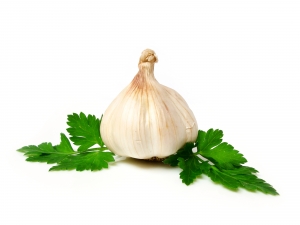
There are thousands of herbs that have been used for thousands of years to treat cancer. None are guaranteed cures for all cancers, but many are non-toxic boosters of immune function and detoxification pathways. If you want the basic herb that all cancer patients should be using daily, then start with garlic--  as a food, seasoning, and/or pill supplement.

garlic

garlic

Many other herbs that merit attention are: Atragalus, Echinacea, goldenseal, licorice, ginseng, ginkgo, ginger, Rhodiola rosea and cat’s claw are on the hit parade of herbs to help you toward recovery from cancer. Work with a professional who can help guide you toward the herbs best for your disease, your therapy, your wallet and your stomach tolerances.

Healthy Fats

While too much fat and the wrong kind of fat have been killing millions of Americans for the past 50years, we are now finding a new form of fat malnutrition: deficiencies of the essential fats. Fish oil, borage or primrose oil, flax oil, conjugated linoleic acid, and shark liver oil are all fats that can help you beat cancer.  For a simple starter, begin taking a few capsules of fish oil daily, preferably basic cod liver oil with all the good Vitamin A and D intact. You can also make a delicious, healthy Italian dressing by using flax oil, olive oil, water, vinegar, and some seasonings.

Healthy fats line the cell membranes and help to lower blood glucose by making insulin more effective. Healthy fat make the immune cells more likely to recognize and destroy cancer cells.

Order the Book here.

~ Be Well. ♥

Exercise: Repair the Effects of Stress

Exercise can be a 4 letter word for some people. Sometimes I just can't get moving.

A sure way to unplug that brain-cork of mine... is to TURN ON THE MUSIC!  I love to dance, rock, belly dancing, swing, you name it. 

Belly dancing is fun, it activates every muscle group, and is a real workout. It is sensual, so it will elevate your mood too.  (You can look up a few how-to's on YouTube to kick things off.)

If you get into it, you might even put together a belly dance outfit!  I purchased a purple coin embellished scarf to tie around my waist.

belly dance costume

Walking in nature is another way to re-energize and get your exercise.  A moderately paced walk for 30 minutes a day will do the trick. You can go alone, or invite a neighbor or friend.

I'm not big on joining classes, I seem to drop out after a few sessions. I would rather have a walking buddy to chat with.  But whatever motivates you to get that body shakin' is great.

Below are excerpts from an article on this topic.

Exercise: Improve Your Mood and Repair the Effects of Stress - By Karyn Hall, PhD

Emotionally sensitive people are often advised to exercise to calm their anxiety or to help overcome depression. Grandmothers, psychiatrists, friends and even strangers often suggest, “Exercise. You’ll feel better.”

In our recent survey, 71.4% of the emotionally sensitive have found exercise helpful in managing their mood. Turns out the research, as reported by John Ratey, MD in his book Spark, shows exercise has a strong effect on mood as well as other important functions of the brain.

Exercise is effective in treating anxiety and panic.  Getting active provides a distraction, reduces muscle tension, builds brain resources (increases and balances serotonin, dopamine and norepinephrine, all important neurotransmitters involved in mood), improves resilience by showing you that you can be effective in controlling anxiety, and breaks the feeling of being trapped and immobilized.

The effects can be equal or even better than medication. The problem is that when people are upset or depressed, they don’t want to exercise.

Establishing a regular exercise program, one that you could maintain when your mood was unpleasant, may be part of the answer. Continuing a routine when you are emotionally dysregulated is easier than starting a new activity.  Regular exercise would also help prevent relapse.

Exercise improves the ability to learn. When you are working on learning new coping skills, new ways of responding, the ability to take in information is obviously important. Dr. Ratey describes an American high school whose students participated in a physical fitness program. They finished first in the world on science and sixth on an international test to compare science and math abilities.  As a whole, US students ranked 18th in science and 19th in math.

Studies have shown that better fitness means improved attention and improved ability to adjust their cognitive performance following a mistake.

How does that happen? Exercise reportedly spurs the development of new nerve cells from stem cells in the hippocampus. Perhaps most importantly, exercise is believed to increase BDNF (brain-derived neurotrophic factor), the master molecule of the learning process. Low levels of BDNF are associated with depression.

Exercise increases cognitive flexibility. Ratey defines cognitive flexibility as being able to shift your thinking and to be creative. Cognitive flexibility would be to apply new strategies to solve problems and use information in creative ways rather than rote memorization of facts. Memorizing coping skills may will not be as helpful as being able to able the information in different situations.

Exercise helps relieve and repair the effects of stress on the body. When stressed, the body releases cortisol. Ratey notes that high levels of cortisol make it difficult for the prefrontal cortex to direct the hippocampus to compare memories, like to determine that a stick is not a snake. Thus when cortisol is high it’s difficult to decide what is a threat and what isn’t a threat, so just about everything seems scary. You can’t think clearly.

In addition, high levels of cortisol kill neurons in the hippocampus (where memories are stored), causing a communication breakdown. This result could partially explain why people get locked into negative thoughts–the hippocampus keeps recycling a negative memory.

Exercise helps prevent the damaging effects of stress and can reverse damage that has been done.  All with very few side effects.

Reference

Ratey, J.( 2008).  Spark. New York:  Little, Brown and Company.

Dark Green Leafy Vegetables (Organic)

Mom said 'Eat Your Veggies'..and we pouted. But Mom was wiser than we ever suspected!

Spinach, kale, romaine lettuce, leaf lettuce, mustard greens, collard greens, chicory, dandelion and Swiss chard are excellent sources of fiber, folate and a wide range of and flavonoids.

kale

Carotenoids are a group of phytonutrients that lend the red, orange and yellow hues to fruits and vegetables...beta-carotene, lycopene, lutein, etc..  Carotenoids are present in all living organisms, but humans are not able to make them and must get them from food.

Carotenoids seem to prevent cancer by acting as antioxidants. Some laboratory research has found that the carotenoids in dark green leafy vegetables can inhibit the growth of certain types of breast cancer cells, skin cancer cells, lung cancer and stomach cancer.

lettuces

The Second Expert Report noted probable evidence that foods containing folate decrease risk of pancreatic cancer and that foods containing dietary fiber probably reduce one’s chances of developing colorectal cancer.

Sugars and Sweeteners - Glycemic Index

It's not easy to shop for foods by glycemic index unless you know what that is.  Once you have the ratings you can incorporate them into your shopping list before you leave the house.  With this in hand, and soon in your head!, you will be able to make intelligent choices about what is 'healthy'. The Glycemic Index (GI) is a numerical scale used to indicate how fast and how high a particular food can raise our blood glucose (blood sugar) level. A food with a low GI will typically prompt a moderate rise in blood glucose, while foods with a high GI may cause our blood glucose level to spike above the optimal level.

An awareness of foods' Glycemic Index can help you control your blood sugar levels, and may help you prevent heart disease, improve cholesterol levels, prevent insulin resistance and type-2 diabetes, prevent certain cancers, and achieve or maintain a healthy weight.

Note: A study tracked participants for year and found that overweight people on a low-carb, low-glycemic-index diet lost just as much weight -- 8% of their original weight -- as people on a reduced-fat, high-glycemic-index diet. So as long as you stick with healthy fats (Coconut and Olive oil), your focus should be on the GI of the foods you eat.

sugar_1

Artificial Sweeteners N/A Never a Healthy Sugar Alternative All artificial chemical sweeteners are toxic and can indirectly lead to weight gain, the very reason many people consume them. They should be avoided. In fact, given a choice between high fructose corn syrup and artificial sweeteners, we recommend high fructose corn syrup by far (though it's essentially asking if you should consume poison or worse poison).

Stevia 0 Best Healthy Sugar Alternative Though it is 200-300 times sweeter than table sugar, stevia is not a sugar. Unlike other popular sweeteners, it has a glycemic index rating of less than 1 and therefore does not feed candida (yeast) or cause any of the numerous other problems associated with sugar consumption. Please note that Stevia and Truvia are not the same thing.

Xylitol 7 Xylitol is a natural sugar alcohol sweetener found in the fibers of fruits and vegetables which can cause bloating, diarrhea, and flatulence with initial consumption. It's said to be safe for pregnant women, and is said to possibly treat ear infections, osteoporosis, respiratory infections, candida, and is it even helps fight cavities. In fact, in Finland, virtually all chewing gum is sweetened with xylitol.

Agave Nectar 15-30 * Although it has a low-glycemic index, Agave syrup is made from the Blue Agave plant by the extraction and purification of "sap" from the agave plant, which is broken down by natural enzymes into the mono-saccharides (simple sugars): mainly fructose (70-75%) and dextrose (20-26%).

* Agave nectar is 90% fructose. If excessive fructose is causing our obesity, diabetes, and metabolic syndrome epidemic, then agave might be worse than high fructose corn syrup (55% fructose) and worse than table sugar.

Fructose doesn’t stimulate insulin release and as a result, doesn’t stimulate the release of another hormone that makes us feel full. Plus, fructose goes to the liver to be broken down, and there it is converted to fat, which can raise cholesterol and triglycerides.

Furthermore, much of the Agave Syrups sold in stores are made from fructose and have little or no actual Agave sap in them.

Fructose 17 Though fructose has a low glycemic index rating, fructose consumption should be limited. Fructose is linked to heart disease as it raises triglycerides and cholesterol. It is devoid of nutrition. Refined fructose puts an enormous strain on the liver.

Brown Rice Syrup 85 It is not recommended for diabetics, since its sweetness comes from maltose, which is known to cause spikes in blood sugar.

honeycomb_3

Raw Honey 30 A Healthy Sugar Alternative in moderation With antioxidants, minerals, vitamins, amino acids, enzymes, carbohydrates, and phytonutrients, raw, unprocessed honey is considered a super-food by many alternative health care practitioners and a remedy for many health ailments. Choose your honey wisely. There is nothing beneficial about processed honey.

Coconut Palm Sugar 35 Originally made from the sugary sap of the Palmyra palm , the date palm or sugar date palm (Phoenix sylvestris). It's also made from the sap of coconut palms. With a relatively low glycemic index, Coconut palm sugar is the new rage among health nuts. It's often called "coconut nectar sugar" or "coconut sugar".  BUT.. The composition of coconut sugar (also known as gula kelapa, jaggery or gur) obtained from three locations in Indonesia was determined using HPLC. Sucrose was the major component of all samples (70-79%) followed by glucose and fructose (3-9% each).

Apple Juice 40 Fresh apple juice is good for you, though we recommend eating fresh raw whole apples. Concentrated apple juice (sometimes used as a sweetener) is closer to refined sugar than fresh apple juice.

Barley Malt Syrup 42 Barley malt syrup is considered to be one of the healthiest sweeteners in the natural food industry. Barley malt is made by soaking and sprouting barley to make malt, then combining it with more barley and cooking this mixture until the starch is converted to sugar. The mash is then strained and cooked down to syrup or dried into powder.

Amasake 43 This is an ancient, Oriental whole grain sweetener made from cultured brown rice. It has a thick, pudding-like consistency. It's not easy to find in the U.S., but it is a great alternative to refined table sugar.

Sugar Cane Juice 43 Healthy Sugar Alternative in moderation.  Sugar cane juice has many nutrients and other beneficial properties and is said by some health practitioners to be almost as medicinal as raw honey. The use of this substance (in moderation of course) has not been associated with any negative side effects or dangerous medical conditions.

Organic Sugar 47 Organic sugar comes from sugar cane grown without the use of chemicals or pesticides. It is usually darker than traditional white sugar because it contains some molasses. (It has not been processed to the degree white sugar is processed).

Maple Syrup 54 Maple syrup is made by boiling sap collected from natural growth maple trees during March & April. It is refined sap and is therefore processed.  It has a high glycemic index, and though it is much more nutritious than refined table sugar and high fructose corn syrup, there are better choices.

cane sugar

Evaporated Cane Juice 55 Evaporated cane juice is often considered unrefined sugar, but juicing is a refining process, and evaporating refines further. Though better than turbinado, cane juice (unevaporated) is a better choice as a sweetener.

Black Strap Molasses 55 White refined table sugar is sugar cane with all the nutrition taken out. Black strap molasses is all of that nutrition that was taken away. A quality organic (must be organic!) molasses provides iron, calcium, copper, magnesium, phosphorus, potassium and zinc, and is alkalizing to the body.

Turbinado 65 Turbinado sugar is partially processed sugar, also called raw sugar.

Raw sugar 65 Raw sugar is not actually raw sugar. It is processed, though not as refined as common white table sugar. Therefore, given a choice between raw and white, choose raw. There are many variations of raw sugar with names depending on how refined it is.

Cola (and most other sodas) 70 Though cola has a lower GI ranking then some might expect, there are many other reasons to avoid cola, or any type of soda. There is nothing beneficial to the human body inside a can of soda (not to mention we should avoid drinking out of aluminum cans!).

Corn Syrup 75 Corn syrup has very little nutrition and should be avoided.

Refined, Pasteurized Honey 75 The nutrition is gone, and there is often high fructose corn syrup added to processed honey. Refined pasteurized honey is no better than white table sugar.

Refined Table Sugar 80 Conventionally grown, chemically processed, and striped of all beneficial properties, many health advocates believe that refined sugar is one of the two leading causes (high fructose corn syrup is the other) of nearly every health ailment known to man (or woman or child). Not only does it have a high GI ranking, but it also is extremely acidic to the body causing calcium and other mineral depletion from bones and organs (sugar is alkaline but has a very acidic effect on the body).

High Fructose Corn Syrup 87 Many health advocates believe that high fructose corn syrup and refined sugar are the two biggest contributors to health ailments in our society. High fructose corn syrup is a combination of sucrose and fructose.

Glucose (AKA Dextrose) 100 White bread was the benchmark, but for consistency glucose now holds the rating at 100.

Maltodextrin 150 Foods that have maltodextrin often say "Low Sugar" or "Complex Carbohydrate", but this sweetener should be avoided!

*~*~*~*~*

  ~ To Your Health! ♥