Eat Wild Thyme for a Wild Time!

Thyme, botanically known as Thymus vulgaris, is a perennial garden herb that has been employed since ancient times for medicinal and culinary uses.

thyme1

The World's Healthiest Foods

notes that thyme has traditionally been associated with courage, with medieval women giving sprigs of thyme to knights going into battle; it has also been used as an herbal remedy for a host of ailments (PMS, Indigestion, Coughs..). It is an excellent source of iron and manganese, a very good source of calcium and a food source of dietary fiber.Since the 16th century, thyme oil has been used for its antiseptic properties, both as mouthwash and a topical application. Thyme tea, rich in volatile oils, minerals, beneficial phenols and flavonoids, is a healthy beverage choice. One of the popular culinary herb plants, thyme is native to Southern Europe and Mediterranean regions.

For thousands of years, herbs and spices have been used to help preserve foods and protect them from microbial contamination. Research shows that both thyme and basil contain constituents that can both prevent contamination and decontaminate previously contaminated foods.

Thymol has been found to protect and significantly increase the percentage of healthy fats found in cell membranes and other cell structures. In particular, the amount of DHA (an omega-3 fatty acid) in brain, kidney, and heart cell membranes was increased after dietary supplementation with thyme.

In Lebanon we use green and dried thyme extensively.  Dried thyme mixed with sumac, toasted sesame seeds and salt is called Zaatar. It is the main ingredient in the most traditional breakfast food, namely the Man'oushi...or Zaatar pie, which is sold in every bakery and many street vendor carts.
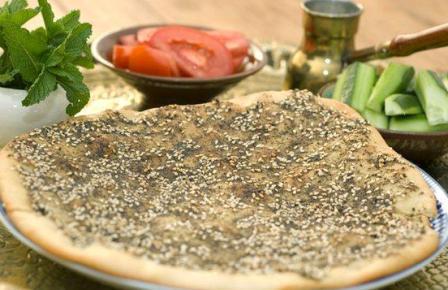
Man'oushi

(photo courtesy of Stephen Masry)

Culinary Tips

Green wild thyme makes a very healthy salad!  Serve it with grilled meats and fish, or accompanied by Feta cheese and tomatoes for breakfast.  I like to use it in place of Oregano in some pasta dishes.  Dry Zaatar is delicious sprinkled on yogurt, hummus and plain omelets.

You can find Zaatar at most Middle Eastern markets. Make sure you choose Jordanian or Lebanese Zaatar.  There are some inferior products out there.

Zaatar

For each 1 cup of store bought Zaatar (Middle Eastern Thyme mix) you will need:

  • 1 Tbs. dried Sumac (available at Middle Eastern markets in packets or jars) 1/2 tsp. of salt

  • 1 tsp. toasted Sesame Seeds (even if there are some in the mix)

Mix all together and store in airtight jars in the refrigerator for 6 months, or freeze for up to 2 years.

zaatar, green

Green Wild Thyme Salad

  • 1 bunch of green Wild Thyme, rinsed and leaves picked off stems

  • 1 very small Onion (yellow or white), finely chopped

  • 1/3 c. finely chopped organic Green Onion

  • Juice from 1 freshly squeezed Lemon

  • 1 Tbs. extra virgin Olive Oil

  • 1/4 tsp. Sea Salt (opt.)

Mix all together in non-metal bowl.  Serve at room temperature for best flavor.

~ Sahtein! (double health)  ♥

The Versatile Eggplant

My Tasty Eggplant Dip

In Lebanon the Eggplant is known as theKing of the Stuffed Vegetables, for its versatility. In my family its known as the shape of most of my Aunts! :)

Eggplants are very low in saturated fat and cholesterol. They are a good source of Vitamin K, Thiamin, Vitamin B6, Folate, Potassium and Manganese, and a very good source of dietary fiber.

eggplant

eggplant

Eggplants belong to the nightshade family of vegetables, which also includes tomatoes, sweet peppers and potatoes. Properly cooked, the slight bitterness eggplants possess can be compensated for by enhancing the flavor so unique for this vegetable.

Research has shown that eggplants contain an anthocyanin phytonutrient in the skin called nasunin. Nasunin is a potent antioxidant and free radical scavenger that has been shown to protect cell membranes from damage.

The August 10, 2005 issue of the "Journal of Agricultural and Food Chemistry" reports that a study shows the nasunin in eggplant hasanti-angiogenic abilities. The Cancer Center at the Angiogenesis Foundation explains that when something is angiogenic, it stimulates new growth of blood vessels and blood supply. Cancerous cells can gain angiogenesis ability, which means they can develop a means to increase their own blood supply, which can cause a cancerous mass or tumor to grow rather quickly. Nasunin in eggplant has the ability to prevent angiogenesis from occurring.

I will post several recipes that feature our plump purple friend.

Hoda's Spicy Eggplant Dip

eggplant sliced

eggplant sliced

  • 1 large organic Eggplant, peeled in zebra stripes

  • 3 cloves Garlic, minced

  • 2 Tbs. organic Cilantro, chopped

  • 1 small Chili pepper, seeded and minced

  • 2 Tbs. Coconut oil

  • 1/2 c. Green tTa or hot Water

  • 1/2 tsp. Stevia or 1 tsp. Xylitol

  • 1/2 tsp. Black pepper

  • 2 tsp. Sesame oil

Garnish

  • 2 Tbs. organic Cilantro, chopped

  • 2 Tbs. organic ripe Tomato, chopped

Slice eggplant lengthwise into 1/2" slices.  sprinkle each with salt and stack. Put on doubled paper towels, placing a heavy pan on top to press down. Wait 10 minutes.

Eggplant slices will leach water. Using fresh (unbleached) paper towels, press slices dry and cut into strips then dice.

Place a saucepan over medium heat and add 1 Tbs.  of the coconut oil.  Wait 1 minute. Add garlic and cilantro and saute for 2-3 minutes, stirring occasionally. Add chili pepper, eggplant and remaining 1 Tbs. coconut oil.  Cook, stirring frequently, until eggplant is wilted and brown. Add water, Stevia and pepper.  Cover and cook for 20 minutes on medium low.

Add sesame oil, stir well, cover and cook for additional 10 minutes.

Eggplant dip2

Spoon into bowl and sprinkle with chopped cilantro and tomatoes.  Serve warm or at room temperature with toasted whole-wheat pita bread chips.

~ To  Your Health! ♥