You Have to Want to ... to See Love Everywhere

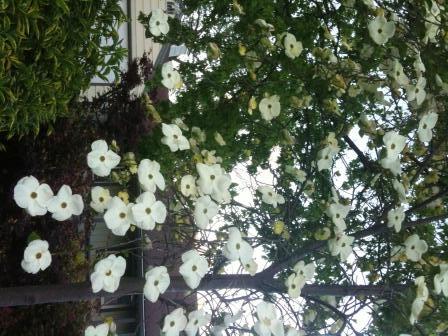
We miss so much of the universe's demonstration of love.  We are either not looking, too busy with our own thoughts, looking but not 'seeing', seeing but not 'recognizing'... and then there are moments like this that confirm solidly that in its many guises... Love is all There Is...  

Click on the word below for a heart warming, love affirming moment.

LOVE


Cheers!

London and Beyond in Pictures

Traveling is a wonderful way to leave your worries and stress behind.  I find it energizing and relaxing at the same time.

London

One of the most exciting, take that any way you like, moments was finding ourselves on a bus that took us too far out of London before we realized we'd missed our stop.  The good news is that the bus driver told us how to get a free ride back, since we seemed like dopey US tourists! While on the bus, we passed this cute back yard garden with its own castle and gnomes... about an hour out of the city.

A Garden outside Brighton '06

A Garden outside Brighton '06

After that detour, we went to the beautiful National Gallery.

National Gallery London

National Gallery London

And at the end of the day, we did what most Londoners would do... and stopped by a Pub not far from my sister's flat for a pint and fish n chips.

After resting for a day in London, we took a bus to Oxford...our mission, visit Christ Church where many scenes were shot in the Harry Potter films.

Chirst Church Oxford '06

Chirst Church Oxford '06

We got a quick bite to eat, and walked to the Church just as the doors were being closed for the day!  We couldn't believe our luck.  So we took a walk through the magnificent University,  did a little shopping and headed back to London.

Oxford2 4_06

Oxford2 4_06

Oxford 4_06

Oxford

Leeds

A bus tour took us to Leeds and Dover.  We both fell in love with Leeds Castle. It was built in 1119 by Robert de Crevecoeur as a Norman stronghold.

The last private owner of the castle was the Hon. Olive, Lady Baillie, a daughter of Almeric Paget, 1st Baron Queenborough, and his first wife, Pauline Payne Whitney, an American heiress. Lady Baillie bought the castle in 1926. She redecorated the interior. During the early part of

World War II

Leeds was used as a hospital where Lady Baillie and her daughters hosted burned Commonwealth airmen as part of their recovery.  The castle was opened to the public in 1976.

Leeds Castle '06

Leeds Castle

Leeds Castle2 4_06

Leeds Castle

Leeds Castle 4_06

Leeds Castle

It's a Blustery Day, KitKat

It's a cool 55º in the Bay Area today.  The wind is whipping around the neighborhood, shaking leaves and knocking the pollen out of every flower's head. A bird decided to build her nest under the awning of my kitchen window a couple of weeks ago.

Our sweet KitKat turned 20 this year!  She has lived outdoors most of her life, gave us an adorable litter of 5 kittens when my daughter was 7 years old, that made their way to family, and provided us with so many fond memories.

kitkat2

Now, 19 years later she is as light as a feather (no weight to her aged bones), deaf as a door knob (but manages to sense when I fill the cat food bowls), and a bit wobbly. She has a little tumor growing under her cheek... but I refuse to put her through surgery at her age.

KitKat 032411

kit kat 03-2012

She still adores laying in the sun. And her favorite spot is in my mint patch.

She's our little granny, and we love her dearly.

In her heyday, when large dogs  innocently wandered into our back yard, they never knew what hit them.  She sprang from nowhere and attacked like a wild cat making them run frantically to find the gate. They couldn't get out of there fast enough! :)

Now she watches the blue jays and skunks eat her food with perfect complaisance.  We are more accepting and generous as we age, aren't we?  I picture her with a lacy cap on, sitting in a rocking chair on the back porch, knitting.

When she meows, it's a hoarse and very loud sound, since she can't hear herself anymore. Sometimes she isn't even looking at us, but out into the yard when she meows.  It's so cute and sad and funny and adorable.

It's been shown time and again that people with pets live longer and are actually healthierthan those who don't care for an animal.   For nearly 25 years, research has shown that living with pets can help lower blood pressure and lessen anxiety. Interesting that they give us so much in return for giving them a home.

Here's to you KitKat.  For the joy you've given me, my children, our family who know you so well, and the friends you've nuzzled, scratched, rubbed against and hissed at!

~ In Gratitude ♥

Exercise: Repair the Effects of Stress

Exercise can be a 4 letter word for some people. Sometimes I just can't get moving.

A sure way to unplug that brain-cork of mine... is to TURN ON THE MUSIC!  I love to dance, rock, belly dancing, swing, you name it.  A tune with a good beat gets me out of a chair in seconds.

In the Middle East children are encouraged to get up and belly dance to entertain the family.  Hand clapping accompanied my Uncle Yusef playing his Oud and singing, or the radio.
Belly dancing is fun, it touches every muscle group, and is a real workout. It is sensual, so it will elevate your mood too.  (You can look up a few how-to's on YouTube to kick things off.)

If you get into it, you might even put together a belly dance outfit!  I purchased a purple coin embellished scarf to tie around my waist.

In an earlier post I discussed the importance of getting outdoors and allowing Nature to help take care of your stress.  Walking is another way to get your exercise.  A moderately paced walk for 30 minutes a day will do the trick. You can go alone, or invite a neighbor or friend.

I'm not big on joining classes, I seem to drop out after a few sessions. I would rather have a walking buddy to chat with.  But whatever motivates you to get that body shakin' is great.

Below are excerpts from an article on this topic.

Exercise: Improve Your Mood and Repair the Effects of Stress - By Karyn Hall, PhD

Emotionally sensitive people are often advised to exercise to calm their anxiety or to help overcome depression. Grandmothers, psychiatrists, friends and even strangers often suggest, “Exercise. You’ll feel better.”

In our recent survey, 71.4% of the emotionally sensitive have found exercise helpful in managing their mood. Turns out the research, as reported by John Ratey, MD in his book Spark, shows exercise has a strong effect on mood as well as other important functions of the brain.

Exercise is effective in treating anxiety and panic.  Getting active provides a distraction, reduces muscle tension, builds brain resources (increases and balances serotonin, dopamine and norepinephrine, all important neurotransmitters involved in mood), improves resilience by showing you that you can be effective in controlling anxiety, and breaks the feeling of being trapped and immobilized.

The effects can be equal or even better than medication. The problem is that when people are upset or depressed, they don’t want to exercise.

Establishing a regular exercise program, one that you could maintain when your mood was unpleasant, may be part of the answer. Continuing a routine when you are emotionally dysregulated is easier than starting a new activity.  Regular exercise would also help prevent relapse.

Exercise improves the ability to learn. When you are working on learning new coping skills, new ways of responding, the ability to take in information is obviously important. Dr. Ratey describes an American high school whose students participated in a physical fitness program. They finished first in the world on science and sixth on an international test to compare science and math abilities.  As a whole, US students ranked 18th in science and 19th in math.

Studies have shown that better fitness means improved attention and improved ability to adjust their cognitive performance following a mistake.

How does that happen? Exercise reportedly spurs the development of new nerve cells from stem cells in the hippocampus. Perhaps most importantly, exercise is believed to increase BDNF (brain-derived neurotrophic factor), the master molecule of the learning process. Low levels of BDNF are associated with depression.

Exercise increases cognitive flexibility. Ratey defines cognitive flexibility as being able to shift your thinking and to be creative. Cognitive flexibility would be to apply new strategies to solve problems and use information in creative ways rather than rote memorization of facts. Memorizing coping skills may will not be as helpful as being able to able the information in different situations.

Exercise helps relieve and repair the effects of stress on the body. When stressed, the body releases cortisol. Ratey notes that high levels of cortisol make it difficult for the prefrontal cortex to direct the hippocampus to compare memories, like to determine that a stick is not a snake. Thus when cortisol is high it’s difficult to decide what is a threat and what isn’t a threat, so just about everything seems scary. You can’t think clearly.

In addition, high levels of cortisol kill neurons in the hippocampus (where memories are stored), causing a communication breakdown. This result could partially explain why people get locked into negative thoughts–the hippocampus keeps recycling a negative memory.

Exercise helps prevent the damaging effects of stress and can reverse damage that has been done.  All with very few side effects.

Reference

Ratey, J.( 2008).  Spark. New York:  Little, Brown and Company.

The Gifts of a Neighborhood Walk

Yesterday was a balmy 88º so I had to wait until after 7:00pm to take my walk.  Armed with my iphone which I use as an ipod while walking, off I went. I am fortunate to live in a quiet, lush area of this suburban city of ours. I have 5 large trees on my property... two are the rather messy but wonderfully shade-giving mulberry trees, and one is a pine that is over 20' feet tall.

Our home is on a corner lot, so we've planted flowering shrubs against the house...camellias, azaleas, baby's breath, and Hydrangea that are a gorgeous purple blue.


Here are the gems I am treated to as I take my walk...as the seasons change, so do some of the sights of course...on this warm day and after a heavy rain last week, nature was basking and blooming and boasting!

Tiny white, yellow, purple and pink ground cover flowers poked their heads out of the greenery along the street, beckoning to bees and color-loving creatures...I discovered I was one of them.


Some of the yards sported amusing mailboxes.  Here two of them...


This is one of my favorite front yards.. it's full of whimsical sculptures and this wonderful water pump and tub.

Makes me want to replace the grass that covers our yard and get busy with rock creations and stuff from a flea market sale!


Tiny bushes huddled together, commenting on the passersby, command ones respect like flat, green, you-can-step-all-over me grass never can.


And then I came upon this striking orange puff of flowers...actually there were about 10 of them hugging posts that outlined a corner lot.


I am partial to white flowers, and this tree charmed me...bending branches to allow us shorter creations to better admire its loveliness.


I can't remember the name of this powder puff flower! ?

Talk about show-offs! Red leaves, green leaves and a sprinkling of white frost... doesn't this look like Christmas in April?  Luscious!


And of course what garden is complete with roses?


Well it's almost the end of my walk.  I didn't see the orange tabby that usually comes running to me as I pass her house, and walks part way down her street with me.


Maybe we'll meet tomorrow.


Giving our attention to the abundant attractions that the Universe has laid out for our pleasure and enchantment is a meditation. What an easy way to lift our spirits and rejuvenate our connection with Mother Earth.


~ Namaste!


Walking Around the Garden this Morning

My L-shaped back yard is undergoing slow re-landscaping! This mean my boyfriend and I are doing the work when we can. Walking in the yard, even in its transitional phase, is soothing and grounding. Birds are frequently twittering in the plentiful trees in our neighborhood, and as of yesterday a couple is building a nest under the little metal awning over our kitchen window. They've been very busy this morning.

I noticed the mint patch needed weeding, so I decided to do it right then.  I pulled the pesky grass and sticky weeds up, enjoying the sound of our wind chimes playing tunes with the light breeze.

A few truant branches from our neighbor's plum-tree, dangle their limbs over the fence. Another favorite of mine.. sour plums! They are a street-vendor food in many Mediterranean countries, sold with a twisted corner of newspaper containing salt.

mulberry
mulberry

One of my fondest childhood memories is climbing up my Uncle Yusef's fruit-laden mulberry tree with my 3 cousins, and within minutes getting tattooed with purple splotches. When they are still white they actually have a flavor, unlike any I can describe. Well, this year my sweetheart, who has heard the mulberry tree story more than once, surprised me with this weeping mulberry. Isn't it darling?  Next year I hope to be covered in purple!

The parsley plants against the house are rather perky this morning.  We had an amazing rainfall last week, and they apparently enjoyed it. And from the looks of it, so did the sage.

sage
sage

Yesterday I asked my son to grab what ever lemons were left on our trees, and he brought me 6.  This crop is almost all gone but I was sure there were more than 6 left.  I was right. He's so tall that I don't think he remembers to look low for stuff!

fresh lemons
fresh lemons

I was able to reach most of the Meyer lemons that were left; some can stay on the branches for another week.  I noticed that new lavender and white buds dotted the trees.  They are amazingly prolific.

Even if you're not into gardening, put a chair in your back yard and chill with a book or a glass of cold minted green tea (or hot depending on the climate!), and let nature do its magic on your mind, body and soul.  It will, you know.

~ Cheers! ♥

Laughter Yoga

It always amazes me how many things children can find to giggle or laugh about in a day.  What happens to our ability to laugh as we get older? My boyfriend's girls, 10 and 12, are constantly giggling at something. I seem to judge each thing on my internal laugh index before I deem it worthy of my laughter!  Sheesh! Don't get me wrong, I have a wicked sense of humor, and use it often.  Ask my relatives!  But when it comes to expressing hilarity at something someone else does or says ... her come da Judge! lol

I've made a promise to myself to laugh at every attempt someone makes to be funny. I get the benefit of the laughter, and they get the benefit of feeling good about making me laugh! Talk about a Win-Win.

Kataria is a physician from Mumbai, India, and is the founder of and chief proselytizer for Laughter Yoga. Based on his teachings over the past fifteen years 5,000 laughter clubs have sprung up worldwide. People meet just to laugh.

So far there are around 200 clubs in the United States, including ones in Atlanta; New York; Orlando, Florida; St. Louis; and Tucson, Arizona. Kataria hopes to change that over the next few years, by training more teachers.

“Our objective is to build an international community of people who believe in love and laughter,” Kataria says.

Near Pasadena, California about 20 people—yoga instructors and health care providers, and retirees—have gathered in a spacious 1910 Craftsman bungalow for this workshop. The five-day training includes sessions on the health benefits of laughter, starting and running a laughter club, and working with particular populations, such as children and the elderly. Most of the time is spent on what Kataria calls his “breakthrough technology”: exercises designed to get people to laugh for no reason.

Combining simple yoga breathing techniques and “laughter meditation” we get to the heart of Laughter Yoga. Kataria promises that Laughter Yoga relieves stress, boosts immunity, fights depression, and eventually makes people into more positive thinkers.

How Laughter Heals

Kataria says, “When you start laughing, your chemistry changes, your physiology changes, your chances to experience happiness are much greater. Laughter Yoga is nothing more than prepping the body and mind for happiness.”

According to Kataria laughter has two sources, one from the body, one from the mind. Adults tend to laugh from the mind. “We use judgments and evaluations about what’s funny and what isn’t,” he says. Children, who laugh much more frequently, laugh from the body. “They laugh all the time they’re playing. Laughter Yoga is based on cultivating your childlike playfulness. We all have a child inside us wanting to laugh, wanting to play.”

The idea that laughter has beneficial effects is not new. Norman Cousins, editor of the Saturday Review, documented his own laughter cure in the 1979 book 'Anatomy of an Illness as Perceived by the Patient'. Cousins was diagnosed in the mid-1960s with ankylosing spondylitis, a painful degenerative disease of the connective tissue that left him weak and barely able to move. Doctors gave him a 500-to-1 chance of recovery.

Instead of undergoing conventional treatments, Cousins checked out of the hospital and into a hotel, where he set up a film projector and played funny movies. He took massive doses of vitamin C and submitted himself to hours of the Marx Brothers. “I made the joyous discovery that ten minutes of genuine belly laughter had an anesthetic effect,” he wrote, “and would give me at least two hours of pain-free sleep.”

Cousins recovered and lived for another 26 years. And, in part inspired by his experience, a handful of scientists began researching the healing power of laughter. William Fry, then a psychiatrist at Stanford University, was one of those people.  Fry documented some of the health benefits of what he calls “mirthful laughter.” In a series of studies, Fry and his colleagues found that laughter increases circulation, stimulates the immune system, exercises the muscles, and even invigorates the brain. Other researchers have found that laughter reduces stress hormones and may even help prevent heart disease.

What about forced laughter?  Fry believes that aside from the mental stimulation that comes in the moment of discovery when you hear a good joke or appreciate a pun, the effects should be largely the same. “I think it’s definitely beneficial,” says Fry.

How do you laugh when nothing’s funny? Just open your mouth and force the breath out with your belly!  Trust me, it’s going to feel silly at first, but you know, if you get a bunch of people together and do this...you’ll all be genuinely laughing in no time! Try it with your kids, they’re experts at it.

Do you remember the scene in Mary Poppins when Uncle Albert is singing "I Love to Laugh"?  Well that should be your training video!

So let’s get started:

Lion laughter Stick out your tongue, widen your eyes, and stretch your hands out like claws and laugh.

Nasal laughter Laugh with your mouth closed and push the air out through your nose.

Silent laughter Open your mouth wide and laugh without making a sound. Look into another person’s eyes and make funny gestures.

Gradual laughter Start with a smile then slowly start laughing with a chuckle. Turn up the intensity of your laugh until you’ve achieved a belly laugh. Gradually bring your laughter back down to a smile.

Heart-to-heart laughter Hold hands with another person and laugh. If you feel comfortable together can touch or hug.

~Hilariously yours!