Guaranteed to Raise Your Antioxidant Level

It is rare to find a company that has enough research behind their product that they can offer a money-back guarantee if it does not perform. Depending on the supplement you are taking, it's not always an easy task to discover if you're getting the full benefit from what you're taking.  With Vitamins like D, you can do a blood test, but when your goal is to raise your antioxidant levels, testing how well  you're doing can be costly.

What Depletes Antioxidants Stored in our Body?

Many things contribute to the depletion of antioxidants in our bodies...stress, smoking, lack of good digestion, too much exercise, infection, etc.

Vitamin C fights free radicals in body tissues and blood plasma, while vitamin E protects fat-rich molecules, such as LDL and HDL cholesterol, and fat cells from oxidation. This effort to protect the body results in the depletion of vitamin C and E in body stores.

Our bodies store antioxidants for use when we need them.  If we are not storing enough, we are less likely able to fight off inflammatory diseases like diabetes, heart disease and cancer. Eating a balanced diet with 5 to 10 servings of fruits and vegetables every dayto obtain maximum levels of dietary antioxidants is recommended, but not always achievable.

To boost your vitamin E levels, include whole grains, nuts and seeds, egg yolks and vitamin E- fortified foods in your diet. Consult your doctor about vitamin supplementation.

Choosing an Antioxidant Supplement

Choosing an antioxidant supplement — You want to make sure the manufacturer uses pure ingredients from a trusted source, organic when possible, has both their own and third-party research behind the formulas, and is reputable.

There are a handful of companies that meet these criteria, but only one I know of that also offers a money back guarantee.

Lifepak Nano is a proprietary innovation in anti-aging protection with advanced bio-availability and maximum benefits. It is manufactured by NuSkin / Pharmanex, one of the leading anti-aging research companies.

Lifepak Nano is their star supplement, which exhibits rather exceptional results. If you are considering a comprehensive Vitamin/Mineral/Flavonoid supplement, consider this product.

  • Specific purpose to guard against the ravages of aging each day of your lifespan*

  • Superior bio-availability with CR-6 LipoNutrients™ enhances uptake from the gut into the bloodstream and body for maximum anti-aging benefits*

  • Advanced anti-aging formula helps protect the body with key nutrients such as NanoCoQ10™ and nano carotenoids*

  • Helps maintain normal inflammatory responses in the body*

  • Feeds and helps protect the brain with DHA and EPA*

  • Offers superior DNA protection against damaging free radical attacks by providing the body with important antioxidants and phytonutrients such as alpha-lipoic acid and catechins*

  • Protects cell health with an antioxidant defense network*

  • Helps protect cardiovascular health with a comprehensive blend of omega-3 fatty acids and other nutrients

  • Provides comprehensive bone nutrition support*

  • Promotes healthy immune function*

  • Supports normal blood sugar metabolism*

  • Corrects nutritional deficiencies*

~ Be Well! ♥

Glutathione

"It's the most important molecule you need to stay healthy and prevent disease --

yet you've probably never heard of it. It's the secret to prevent aging, cancer, heart disease, dementia and more, and necessary to treat everything from autism to Alzheimer's disease. There are more than 89,000 medical articles about it -- but your doctor doesn't know how address the epidemic deficiency of this critical life-giving molecule ...

GLUTATHIONE (pronounced "gloota-thigh-own") is a master detoxifier and maestro of the immune system. The highest concentration of glutathione is found in the liver, making it critically important in the detoxification and elimination of free radicals. Accumulation of these dangerous compounds can result in oxidative stress, which occurs when the generation of free radicals in the body exceeds the body’s ability to neutralize and eliminate them.

 How Should Glutathione Be Taken?

 Unfortunately the BEST way to get supplemental glutathione into our system is through intravenous therapy. Glutathione is probably not well absorbed into the body when taken by mouth.  A more practical solution is to take the precursors -- that is, the molecules the body needs to make glutathione -- rather than glutathione itself. While there is no solid proof this works, the consensus among experts is that doing so will increase the amount of glutathione in the cells.

   "The good news is that your body produces its own glutathione. The bad news is that poor diet, pollution, toxins, medications, stress, trauma, aging, infections and radiation all deplete your glutathione.   This leaves you susceptible to unrestrained cell disintegration from oxidative stress, free radicals, infections and cancer. And your liver gets overloaded and damaged, making it unable to do its job of detoxification.

   “At first I thought that this was just a coincidental finding, but over the years I have come to realize that our ability to produce and maintain a high level of glutathione is critical to recovery from nearly all chronic illness -- and to preventing disease and maintaining optimal health and performance. "  from Dr. Mark Hyman's blog .. read more here.

other Sources:

 Glutathione: New Supplement on the Block

 Gustavo Bounous, MD, is director of research and development at Immunotec and a retired professor of surgery at McGill University in Montreal, Canada. "It's the [body's] most important antioxidant because it's within the cell."

 Antioxidants -- the most well-known of which are vitamins C and E -- are important for good health because they neutralize free radicals, which can build up in cells and cause damage.

 Glutathione occurs naturally in many foods, and people who eat well probably have enough in their diets, says Dean Jones, PhD, professor of biochemistry and director of nutritional health sciences at Emory University in Atlanta. Those with diets high in fresh fruits and vegetables and freshly prepared meats are most likely just fine. On the other hand, those with poor diets may get too little.

 Appleton is Chairman of the Department of Nutrition at the National College of Naturopathic Medicine in Portland, Ore., and senior science editor for Healthnotes, a database on complementary and alternative medicine available at newspaper stands and health food stores.

 "If you look in a hospital situation at people who have cancer, AIDS, or other very serious disease, almost invariably they are depleted in glutathione," says Appleton. "The reasons for this are not completely understood, but we do know that glutathione is extremely important for maintaining intracellular health."

Bounous has developed a glutathione-enhancing product called Immunocal, which is made up of glutathione precursors, mainly the amino acid cysteine.

 Who Does Glutathione Help?

 Animal and laboratory studies have demonstrated that glutathione has the potential to fight almost any disease, particularly those associated with aging, since free radical damage is the cause of many of the diseases of old age.

 "Theoretically, there are many very strong arguments in favor of a therapeutic use of glutathione," says Appleton. "But when people have actually tried to use glutathione as an oral supplement, nasal spray, or intravenously, the results have been more of a preliminary nature. The amount of research on glutathione as a supplement ... is very limited."

 The best studies have been conducted in cancer. One study involved women with ovarian cancer who were being treated with chemotherapy. Some of the women were also treated with intravenous glutathione. Those given the glutathione not only had fewer side effects from the chemotherapy but also had better overall survival rates.

 Case Study

Myriam Abalain of Montreal, Canada, is one of the many people who have taken Bounous's Immunocal to combat cancer. In 1996, at age 33, a routine PAP smear revealed she had precancerous cells on her cervix, which is one step away from having cervical cancer. The three specialists she visited all told her that a hysterectomy was her only option, but she hesitated to have such major, life-altering surgery.

 Instead, she waited. For more than two years, her condition remained stable. Then a friend suggested she try Immunocal. After eight months of taking the supplement, her physician could no longer detect any precancerous cells. Does this mean Immunocal cured her? It's hard to say based on just one case like hers. It is possible her body went into remission naturally.

 Even Bounous acknowledges there's no real proof his product cured her cancer, but he's working on conducting good clinical research, comparing individuals with cancer taking glutathione to those who are not.


What Are the Risks?

 Overall, taking glutathione or its precursors in reasonable amounts appears to be quite safe, although it should be avoided in people with milk protein allergies and in those who have received an organ transplant.

 Appleton recognizes this possibility but says "there's no evidence that supplementing with glutathione, even intravenously, is in any way going to make any cancer worse. In fact, the evidence we have suggests the opposite."

 The upshot? The experts disagree on who should take glutathione or its precursors. Bounous says everyone should take it in order to optimize overall health. Appleton would reserve it for people with cancer. Jones says it might only prove beneficial for those who eat poorly and are thus unlikely to be getting much glutathione or its precursors in their diet.

 They all acknowledge that people with severe diseases known to be associated with low glutathione levels, such as AIDS, may well benefit from the supplement, although there is no proof to this effect.

 For her part, Myriam Abalain is still taking Immunocal and feeling fine. "I'm doing pretty

Talk to your doctor about Glutathione treatment, especially if you are in Chemotherapy.

  Be Well.  ♥

Wake Up Call - Pesticides, Natural Chemicals and Our Health

When I read information like the following Abstract, I'm stunned that we wait for someone to "prove" what we have enough evidence to "suspect" is the cause of illness.  We wait until it's too late to do anything about it...instead of immediately thinking, "My life is too precious. If there is a 'possible link I am not going to take a chance.  I can live without xxxx in my life."

Pesticides and cancer: Dich J, Zahm SH, Hanberg A, Adami HO.

Abstract

"Epidemiologic evidence on the relationship between chemical pesticides and cancer is reviewed.

In animal studies, many pesticides are carcinogenic, (e.g., organochlorines, creosote, and sulfallate) while others (notably, the organochlorines DDT, chlordane, and lindane) are tumor promoters. Some contaminants in commercial pesticide formulations also may pose a carcinogenic risk.

In humans, arsenic compounds and insecticides used occupationally have been classified as carcinogens by the International Agency for Research on Cancer. Human data, however, are limited by the small number of studies that evaluate individual pesticides.

Epidemiologic studies, although sometimes contradictory, have linked phenoxy acid herbicides or contaminants in them with soft tissue sarcoma (STS) and malignant lymphoma; organochlorine insecticides are linked with STS, non-Hodgkin's lymphoma (NHL), leukemia, and, less consistently, with cancers of the lung and breast; organophosphorous compounds (About 70% of the insecticides in current use in the United States are organophosphorous (OP) pesticides, a total of around 90 million pounds per year) are linked with NHL and leukemia; and triazine herbicides with ovarian cancer.

Few, if any, of these associations can be considered established and causal. Hence, further epidemiologic studies are needed with detailed exposure assessment for individual pesticides, taking into consideration work practices, use of protective equipment, and other measures to reduce risk. "

SourceDepartment of Cancer Epidemiology, Karolinska Institute and Radiumhemmet, Karolinska University Hospital, Stockholm, Sweden.

_ _ _

And here is a summary from the EPA's website:

Pesticides and Food: Health Problems Pesticides May Pose

Laboratory studies show that pesticides can cause health problems, such as birth defects, nerve damage, cancer, and other effects that might occur over a long period of time.  However, these effects depend on how toxic the pesticide is and how much of it is consumed. Some pesticides also pose unique health risks to children.

For these reasons, the Federal Government, in cooperation with the States, carefully regulates pesticides to ensure that their use does not pose unreasonable risks to human health or the environment. "

What is "unreasonable risk"?  Is there such a thing as "reasonable risk" when it comes to our health?  Who decides?  People you know nothing about....or YOU?

YOU are in Charge of Your Health and the Health of Your Children

Were bombarded with pollutants from vehicle emissions, manufacturing plants, dry cleaner chemicals,  lawn mowers, those darn awful leaf blowers that make me cookoo, and pesticides sprayed everywhere.  It's a miracle our liver functions at all.  Then add pharmaceuticals, artificial coloring, sugar, lotions with Parabens and EDTA, and deodorants with things we can't spell much less pronounce, and no wonder we're walking hot beds for the development of Alzheimer's, Cancer and a host of other ailments.

Get in the driver's seat You are wise.  Don't wait 10 years until the FDA or the EPA has enough 'clinical' data.  By then you could be one of the subjects they're studying, God forbid!

I have thrown away my Teflon pans, I don't let plastic wrap touch my food (I place a small square of parchment paper or was paper on the food before I wrap it), I never put Aluminum Foil against any sauces or acidic foods (you know the acid eats right through the foil...yes?), and I told my gardener not to use pesticides on any weeds, and to hand rake my leaves.

Love your life and your children's lives enough to sacrifice convenience for caution. It's a different world...we have to think defensively. Some things we can do little about, like air pollution, so do what you can with things you have control over.

~ In Good Health.

Red Clover

This common plant contains an astonishing 125+ chemical constituents, including many minerals, vitamins, and amino acids. Like soy, it contains genestein, and also daidzein, daidzen, and daidzen-glycoside.  This is one reason former USDA herbalist James Duke, PhD, included red clover flowers as an ingredient in his cancer prevention salad. At Purdue University, scientists showed that an extract of red clover “significantly inhibited” a common carcinogen and decreased its binding to DNA by 30 to 40 percent.

A major active compound was then isolated from the clover and identified as biochanin A.

Red clover tea is sweet tasting and innocuous. Through summer and fall you can usually find red clover growing wild (choose a non-polluted area!). Just use one or two clover heads per cup of tea. You may also include whole fresh red clover heads in salads.

Abstract: The Red Clover (Trifolium pratense) isoflavone biochanin A inhibits aromatase activity and expression.

Citrus Fruits (Organic)

Studies have proven that eating citrus fruits is associated with a decrease in cancer development. This is particularly true in digestive tract cancers, those of the pharynx, esophageal, mouth, and stomach. Recent studies have found that children who consume orange juice in the first two years of life have a decreased risk of leukemia.

Squeeze lemon juice in warm water and drink before a meal, or use in salads or on veggies.  Eating the rind of organic citrus fruit is highly recommended. I don't mind munching the rind plain. If that doesn't tickle your fancy, you can grate it and add to soups, salads, muffins, salsa, tea...

Lemon juice creates an alkaline environment in our bodies. Most cancers and bacteria can't thrive in an alkaline body. The guiding principle used by the immune clinic I speak of and spent three weeks at in Southern California, is keeping the body alkaline to reverse or halt cancer in their patients.

The phytochemicals in citrus fruits block tumor growth by direct action, restricting their ability to reproduce. Also citrus fruits may have effect on the body’s modulation of carcinogenic substance detoxification.

If you have or had cancer, then only moderate you consumption of oranges and orange juice is recommended since it is high in sugar, but no limit to the consumption of lemons!

~ Pucker up!

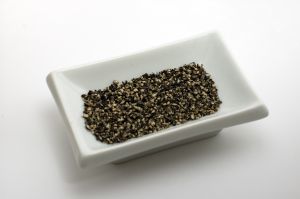
Black Pepper

Black pepper can be a vital anti-cancer component in your diet. Piperine is the active component in pepper that is believed to prevent the harm that free radicals can cause your body. Piperine also has the ability to enhance the absorption of other beneficial anti-cancer compounds in other foods.

When black pepper is ingested alongside green tea, the absorption of the anti-cancer compound EGCG present in green tea is highly increased.  Also, the body’s absorption of  curcumin (the compound in turmeric) increases by 2000% when you add black pepper!

Read more about curcumin here.