Hello Brussels. Why so Bitter?

The Case of the  Brussels Sprout

This is not the story of a boy from Brussels and how he wound up in Court....

This is the story of a Sprout accused of being bitter and unfriendly.  The first mention of this sprout is traced to the late 16th century. It is thought to be native to Belgium, specifically to a region near Brussels, after which it was named.

This Sprout is a member of the Brassica family and therefore related to Broccoli and Cabbage. Don't be fooled by its size however! Watch what you say because a Sprout grows up with a bunch of 20 to 40 other Sprouts, on the stem of a plant that grows as high as three feet tall!

These miniature-sized vegetables contain the largest content of anticancer phytochemical compounds such as glucosinolates. Like broccoli, the indole-3-carbinol has been found to reduce cancer growth especially for estrogen dependent cancers (e.g. uterine, breast, cervical).

brussel sprouts

In order to plead the case for this Sprout I lay before you the following:

Character Traits *

  • Brussels sprouts can help us avoid chronic, excessive inflammation

  • You'll find nearly 100 studies in PubMed (the health research database at the National Library of Medicine in Washington, D.C.) that are focused on Brussels sprouts, and over half of those studies involve the health benefits of this cruciferous vegetable in relationship to cancer

  • They provide us with this cholesterol-lowering benefit whether they are raw or cooked. When the cholesterol-lowering ability of steamed Brussels sprouts was compared with the cholesterol-lowering ability of the prescription drug cholestyramine, Brussels sprouts bound 27% as many bile acids

  • The fiber content of Brussels sprouts: 4 grams in every cup makes this cruciferous vegetable a natural choice for digestive system support.

  • The detox support provided by Brussels sprouts is extensive. There is evidence from human studies that enzyme systems in our cells required for detoxification of cancer-causing substances can be activated by compounds found in Brussels sprouts.

* HealthDiaries.com: 11 Health Benefits of Brussels Sprouts

It Takes Proper Cooking to Bring Out the Sprout's Goodness!

Perfectly cooked Brussels sprouts have a crisp, dense texture and a slightly sweet, bright, and "green" taste. Steaming the Sprouts increases their health benefit potency.

Steam them

Bring a scant 1/2 inch salted water to boil in a large frying pan or saute pan. Add Brussels sprouts, cover, and cook until sprouts are tender to the bite and water has evaporated, about 5-7 minutes (depending on how crisp you like them).

In a Steamer Basket:  Bring about an inch of water to a boil in the bottom of a pot into which your steamer basket or insert fits. Put cleaned Brussels sprouts in the steamer basket, set over the boiling water, cover, and steam until tender to the bite, about 5-7 minutes.

You can toss them with Olive or Coconut Oil, salt and pepper; garlic and lemon; or with Pasta Sauce!

Roast them
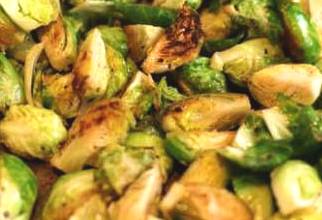
brussel-sprouts, roaste

  • 1 1/2 lbs. organic Brussels sprouts, ends trimmed and yellow leaves discarded

  • 2 Tbs. virgin Olive Oil

  • 1 tsp. Sea Salt

  • 1/2 tsp. freshly ground Black Pepper

  • 1 tsp. Paprika

  • 1/2 tsp. organic Garlic Powder or 2 cloves well mashed

  • 4 Tbs. lemon juice

Rinse Sprouts trim off ends and place in a large bowl. Blend the spices together with the oil and lemon. Pour this over the sprouts and toss until well coated.

Place in oven proof dish or cookie sheet lined with parchment, and roast at 400ºF for 35 minutes or until lightly golden.

Braise them

Braising, or slow cooking in liquid on the stove, is a great way to elicit Brussels sprouts' natural, nutty flavor.
Make room for Mushrooms.. It's What's for Dinner

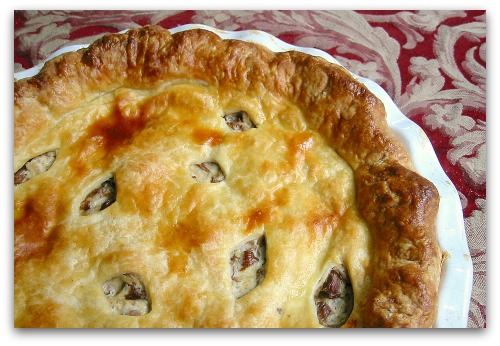
Chanterelle Mushroom – Chicken Pie

Adapted from Tom's recipe at www.tallcloverfarm.com

For the vegetarian version, omit the chicken and add three pounds of mushrooms.  This is a great vegetarian pie as chanterelles are meaty little guys with rich texture.

You will need:

  • Two Pie Crusts: Your favorite Whole Wheat,  Spelt (Whole Foods has a wonderful frozen Spelt crust), or Gluten Free crust of your choice
  • 1.5 lb Chanterelle mushrooms
  • 3 T. Virgin Olive oil
  • 1.5 lb organic, free-range Chicken
  • 1 T. whole wheat Flour
  • 1 Lemon, juiced
  • 1 large Onion, chopped
  • 1 c. Soy Yogurt (Sour Cream if you can eat dairy)
  1. Sauté mushrooms in oil, until tender and most liquid evaporates
  2. Add onion, sauté until translucent
  3. Add diced chicken to pan, cook until tender
  4. Add flour, stir, cook for a few more minutes for thickening
  5. Add lemon juice and yogurt and stir. Let cool to room temperature

Preheat oven to 425 F. Place baking sheet in oven.

Line crust in 9-inch pie plate (10-inch works, too).

Add cooled filling to crust. Place second crust on top and crimp edges. Vent top crust by making 5 – 6 cuts with a knife.

Brush top crust with egg wash (one egg, 1 t. water, mixed).

Place pie on baking sheet in oven, on the middle rack. Bake for 15 minutes, or until top crust begins to brown.

Lower temperature to 350º F, continue baking for another 30 – 35 minutes, until golden and center is firm.

Serve warm (reheats well).

chanterelle mushroom pie Slicin Up Some Chanterelle Mushroom Piephoto credit: http://www.tallcloverfarm.com
Serve with a green salad and roasted balsamic asparagus!

 ~ Bon Apetit!

Garbanzo Beans

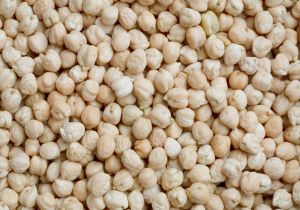
Also known as chickpeas, garbanzo beans originated in the Middle East, the region of the world whose cultures heavily rely on this high protein legume. The first record of garbanzo beans being consumed dates back about seven thousand years. They were first cultivated in the Middle East around 3000 BC. Recent studies have shown that garbanzo bean fiber can be metabolized by bacteria in the colon to produce relatively large amounts of short chain fatty acids (SCFAs), including acetic, propionic, and butyric acid. These provide fuel to the cells that line your intestinal wall. The fiber from garbanzo beans helps supports the energy needs of your intestine.

It is recommended that you consume 1–2 cups of legumes per day, at least 4 days per week, to help lower your risk of colon problems, including your risk of colon cancer.

Garbanzo beans also contain more concentrated supplies of antioxidant phytonutrients. The mineral manganese - a key antioxidant in the energy-producing mitochondria found inside most cells - is also provided in excellent amounts by garbanzo beans.

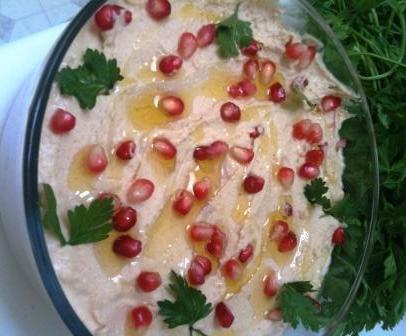
~ Pass the hummus!

Artichoke - The Secret Warrior!

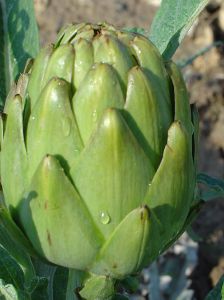
Native to the Mediterranean region, the artichoke is the edible flower bud of a thistle-like plant in the sunflower family. While its thorny leaves may deter us from approaching it; a treasure lies at its heart.

Although artichokes have been eaten for more than 3000 years. California produces 100 percent of the U.S. commercial artichoke crop, rivaled in popularity only in France and Italy.

Artichokes are a good dietary source of phosphorus, magnesium, iron, niacin, vitamin B1 and vitamin B2, and includes some folate, manganese, and zinc. Artichokes have been shown to have antioxidant, anti-fungal, anti-genotoxic, liver-protective and hypoglycemic activities, as well as reducing cholesterol and ameliorating indigestion and irritable bowel syndrome.

There are over 200 scientific articles on artichoke or one of its phytochemical. Researchers at the University of Georg-August in Germany showed that one of its phytochemical interfered with estrogen receptor which promoted the secretion of PSA in prostate cancer. Furthermore, this functional food possesses the ability to inhibit the angiogenesis related to cancer. Other studies demonstrated anti-proliferation and apoptotic proprieties and also inhibit inflammation.

In 2008, scientists from Rome showed that the edible parts of the artichoke had a “marked antioxidative potential” that protects normal liver cells from oxidative stress. It also reduced the viability of cancer cells and led to their programmed cell death, or apoptosis.  (Miccadei S, Di Venere D, Cardinali A, et al. Antioxidative and apoptotic properties of polyphenolic extracts from edible part of artichoke (Cynara scolymus L) on cultured rat hepatocytes and on human hepatoma cells. Nutr Cancer. 2008;60:276-283)

Artichoke extract has been shown to inhibit proliferation and induce apoptosis in triple negative breast cancer cells in the laboratory. Flavone components of artichoke (apigenin and luteolin) have been shown to induce apoptosis across a variety of breast cancer cell lines.

So, artichoke seems like a healthy veggie choice!

You can simply steam or add artichokes to stews, but for those who can't do that every day and want a more consistent ingestion, there are supplements made from concentrated leaf extract. They are not expensive: on the Internet they sell for 5 to 10 cents per capsule.

A standard dose has not been established, but in studies on indigestion patients have taken one to two 320 mg capsules three times per day, preferably with meals.

Resources:

1. Nutr Cancer. 2008;60(2):276-83. Antioxidative and apoptotic properties of polyphenolic extracts from edible part of artichoke (Cynara scolymus L.) on cultured rat hepatocytes and on human hepatoma cells. Miccadei S, Di Venere D, Cardinali A, Romano F, Durazzo A, Foddai MS, Fraioli R, Mobarhan S, Maiani G. 2. Phytother Res. 2008 Feb;22(2):165-8. Growth inhibitory effect of ethyl acetate-soluble fraction of Cynara cardunculus L. in leukemia cells involves cell cycle arrest, cytochrome c release and activation of caspases. Nadova S, Miadokova E, Mucaji P, Grancai D, Cipak L.

~ Be Well.

Watercress, organic

Here's a surprise...even though it may appear to be a shy little green plant, watercress is grouped in the cruciferous vegetable family (like cabbage and broccoli). It packs the power of Glucosinolates, compounds that cause the release of watercress’ primary anticancer compound, phenethyl isothiocyanate (PEITC).  PEITC has been found to protect against cancers of the esophagus, stomach, and colon, as well as lung cancer. It has also been found to exhibit great toxicity against cancer cells from leukemia, colon, and prostate cancer.

"Molecular oncologist Professor Graham Packham and colleagues at Britain’s University of Southampton studied a small group of breast cancer survivors, who underwent a period of fasting before eating 80g of watercress and then providing a series of blood samples over the next 24 hours. Results showed that ingestion of watercress led to a rapid rise in plasma levels of ... (PEITC)."  Read full article here.

And you thought it was just a pretty garnish!  Add generously to your salads, sandwiches and sauces!

~ Greenly yours!

Citrus Fruits (Organic)

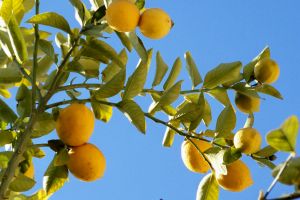
Studies have proven that eating citrus fruits is associated with a decrease in cancer development. This is particularly true in digestive tract cancers, those of the pharynx, esophageal, mouth, and stomach. Recent studies have found that children who consume orange juice in the first two years of life have a decreased risk of leukemia.

Squeeze lemon juice in warm water and drink before a meal, or use in salads or on veggies.  Eating the rind of organic citrus fruit is highly recommended. I don't mind munching the rind plain. If that doesn't tickle your fancy, you can grate it and add to soups, salads, muffins, salsa, tea...

Lemon juice creates an alkaline environment in our bodies. Most cancers and bacteria can't thrive in an alkaline body. The guiding principle used by the immune clinic I speak of and spent three weeks at in Southern California, is keeping the body alkaline to reverse or halt cancer in their patients.

The phytochemicals in citrus fruits block tumor growth by direct action, restricting their ability to reproduce. Also citrus fruits may have effect on the body’s modulation of carcinogenic substance detoxification.

If you have or had cancer, then only moderate you consumption of oranges and orange juice is recommended since it is high in sugar, but no limit to the consumption of lemons!

~ Pucker up!

Broccoli, Cauliflower, Cabbage (Organic)

  These are all members of the cruciferous vegetable family which are notable for their high amounts of glucosinolates. Glucosinolates are a class of compounds that work by releasing two anticancer compounds, isothiocyanates and indoles. These are the active compounds that prevent the activation of carcinogenic substances and are of critical importance in fighting the spread of disease. Broccoli contains an anticancer phytochemical that increases the body’s ability to get rid of toxic substances linked to the development of cancer. It is also capable of inducing cancer cell death.  It is also believed to reduce the occurrence, number, and size of certain tumors. The Indole 3-carbinol (I3C) in broccoli, plays a role in reducing cancer growth in  cancers which are estrogen dependent, like uterine, breast and cervical cancers.

It is always important to buy fresh organic vegetables. To preserve the integrity of their anticancer properties, veggies should be either lightly steamed or stir-fried over medium heat in a little oil mixed with water.