Critical Functions of Vitamin D

the importance of certain vitamins and minerals in cancer inhibition and better prognosis.

What is Vitamin D?

Vitamin D is technically not a vitamin. It is the name given to a group of fat-soluble prohormones (substances that are precursors to hormones that usually have little hormonal activity by themselves). This supplement must be taken with K2, to direct the calcium it builds into bone only.

Two major forms of vitamin D that are important to humans are vitamin D2, or ergocalciferol, and vitamin D3 or cholecalciferol. Vitamin D2 is made naturally by plants, and vitamin D3 is made naturally by the body when the skin is exposed to ultraviolet radiation (in particular, UVB radiation) in sunlight. Vitamin D2 and vitamin D3 can also be commercially manufactured.

The active form of vitamin D in the body is 1,25-dihydroxyvitamin D. It is involved in a number of processes that are essential for good health, including the following:

  • It helps improve muscle strength and immune function.

  • It helps reduce inflammation, (critical for Cancer).

  • It promotes the absorption of calcium from the small intestine.

  • It helps maintain adequate blood levels of the calcium and phosphate needed for bone formation, incorporating minerals to increase strength and density, growth, and repair.

For years, Life Extension has been exploring the potentially devastating consequences of vitamin D deficiency, ranging from cardiovascular disease to cancer. Now in this report, Life Extension magazine examines the link between low levels of plasma vitamin D and autism. At the forefront of this research is Dr. John J. Cannell, executive director of the Vitamin D Council and a forensic psychiatrist at Atascadero State Hospital in California.

The stunning findings suggest that rampant vitamin D deficiency is causally related to brain dysfunction, and may be readily preventable by adequate supplementation.

An epidemic of autism appears to be underway in the United States. According to several respected leaders in child and adult nutrition from across the United States, the current meteoric rise in autism and autism spectrum disorders (ASD) may well be a direct consequence of significant vitamin D deficiencies in pregnant women and their infants.  And evidence points to vitamin D deficiency as the cause of other debilitating brain conditions as well.  This insidious deficiency is readily remedied--yet tragically often missed. 

Read More Here...

Most people get the vitamin D they need through sunlight exposure. It can also be obtained through the diet, but very few foods naturally contain vitamin D. Those that do include fatty fish, fish liver oil, and eggs. 

Most dietary vitamin D comes from fortified foods, such as milk, juices, yogurt, bread, and breakfast cereals. Vitamin D can also be obtained through dietary supplements.

How Vitamin D Reduces the Risk of Cancer

The mechanisms by which vitamin D reduces the risk of cancer are fairly well understood. They include enhancing calcium absorption (in the case of colorectal cancer) [Lamprecht and Lipkin, 2003], inducing cell differentiation, increasing cancer cell apoptosis or death, reducing metastasis and proliferation, and reducing angiogenesis [van den Bemd and Chang, 2002].

In addition, Vitamin D3 down-regulates parathyroid hormone (PTH) [Chapuy et al., 1987]. IGF-I has been implicated in the pathogenesis of human cancer. Since IGF-I stimulates tumor growth and high quantities are a consequence of the standard American diet [Grant, 2002a; 2004], vitamin D can be considered one partial antidote to the American diet.

How Much Vitamin D is needed?

Each person responds differently to UVB exposure and oral intake of vitamin D depending on such factors as skin pigmentation, body mass index (vitamin D is fat soluble), age, condition of digestive tract, other dietary factors, etc.

Dietary vitamin D is insufficient alone to significantly reduce the risk of most cancers since the ingested amounts, up to 200 to 400 I.U. per day, are too low [Grant and Garland, in press]. Evidently, 600 to 1000 I.U per day are required to reduce the risk of vitamin-D-sensitive cancers, except possibly prostate cancer, for which population-average values of serum 25(OH)D are associated with the minimum risk [Tuohimaa et al., 2004; Grant, in press].

The current understanding is that serum 25(OH)D levels should be in the 50 to 70 ng/ml range for cancer prevention and optimal health. The only way to determine one’s 25(OH)D levels is through a blood test.

NOTE: Taking Melatonin supplements allows a reduced dose of Vit. D since they produce a 20 to 100-fold INCREASE in the sensitivity of Breast Cancer cells to Vit. D. This is why periodic blood test to determine Vit. D (25 Hydroxy) level is important.

References:

  1. Chapuy MC, Chapuy P, Meunier PJ. Calcium and vitamin D supplements: effects on calcium metabolism in elderly people. Am J Clin Nutr. 1987;46:324-8.

  2. Devesa SS, Grauman DJ, Blot WJ, Pennello GA, Hoover RN, Fraumeni JF Jr., Atlas of Cancer Mortality in the United States, 1950-1994. NIH Publication No. 99-4564, 1999. website (accessed March 3, 2004).

  3. Doll R, Peto R. The causes of cancer: quantitative estimates of avoidable risks of cancer in the United States today. J Natl Cancer Inst. 1981;66:1191-308.

  4. Garland CF, Garland FC. Do sunlight and vitamin D reduce the likelihood of colon cancer? Int J Epidemiol. 1980;9:227-31.

  5. Garland C, Shekelle RB, Barrett-Connor E, Criqui MH, Rossof AH, Paul O. Dietary vitamin D and calcium and risk of colorectal cancer: a 19-year prospective study in men. Lancet. 1985;1:307-9.

  6. Grant WB. An estimate of premature cancer mortality in the United States due to inadequate doses of solar ultraviolet-B radiation, Cancer, 2002b;94:1867-75.

  7. Grant WB. A multicountry ecologic study of risk and risk reduction factors for prostate cancer mortality. Eur Urol. 2004;45:371-9.

~ Be Well. ♥

Hot-Weather Recipes

Below are 3 Summertime Recipes

Quinoa and Mango Salad

This recipe can be made several hours before and refrigerated. Take it out of the refrigerator about 30 minutes before serving.

Mango Quinoa salad

Mango Quinoa salad

  • 2 c. brewed Green Tea

  • 1 c. uncooked Quinoa

  • 1 c. Mango, cut into small chunks (not too ripe to cut back on sugar content)

  • 1/2 c. sliced organic Green Onion

  • 2 Tbs. dried Cherries, chopped (opt.)

  • 2 Tbs. organic Parsley, chopped

  • 1/4 c. extra virgin organic Olive Oil

  • 1 Tbs. Apple Cider Vinegar (I recommend Bragg's organic)

  • 1 tsp. Dijon Mustard

  • 1/2 tsp. Sea Salt

  • 1/8 tsp. Black Pepper

Combine tea and quinoa in a medium saucepan, and bring to a boil. Reduce heat, and simmer, covered, for 10 minutes. Remove from heat and let stand for 15 minutes. Then transfer to a large bowl.

Add mango, onion, cherries and parsley and mix well.

Combine liquid ingredients with spices and whisk until blended. Pour over quinoa, and mix. Makes about 8 servings.

Tropical Chicken Macadamia Salad

Spicy Vinaigrette

Combine the following in blender, adjusting seasoning as preferred:

Tropical Chicken Salad

Tropical Chicken Salad

  • Scant 1/4 c. organic E.V Olive Oil

  • 1/4 c. Red Wine Vinegar

  • 2 Tbs. Worcestershire Sauce

  • 1 Tbs. Cayenne sauce

  • 2 tsp. Curry Powder

  • 2 tsp. Stevia or Bocha Sweet

  • 2 Cloves Garlic, minced

  • 1/4 tsp. Sea Salt

  • 1/8 tsp. Black Pepper

Reserve 1/2 c. of dressing.

Chicken Salad

  • 1 lb. boneless, skinless Organic free-range Chicken Breasts

  • 8 c. rinsed and torn Watercress and Boston or Green Leaf organic Lettuce

  • 1/4 c. coarsely chopped unsalted Macadamia Nuts

  • 1/2 c. shredded organic Coconut, toasted

  • 1 Tbs. organic Red Bell Pepper, diced (opt.)

Place chicken in large resealable plastic food storage bag.  Pour remaining dressing over chicken. Seal bag, and marinate in the refrigerator for 30 minutes.

Heat oven to broil, or prepare barbecue grill. 

chicken-1379373_1280.jpg

Remove chicken from marinade. Grill or Broil 10 - 15 minutes or until center is no longer pink (165º F).  Arrange greens on a platter. Slice chicken breasts and arrange over greens. Tops with nuts, coconut and bell pepper. Serve with reserved dressing. Makes about 4 servings.

Egg White Salad

This high protein salad has less than 2g. of fat per serving, and a whopping 11 g. of protein.

  • 6 Hi Omega-3 hard-boiled Egg whites, chilled and chopped

  • 1/2 c. chopped organic Celery

  • 1/4 c. chopped organic Red Onion

  • 1 Tbs. chopped dill or sweet organic Pickles

  • 2 Tbs. chopped organic Parsley

  • 3 Tbs. Vegenaise

  • 1 tsp. Dijon Mustard

  • 1 tsp. organic Lime Juice

  • 1/2 tsp. organic Lemon Juice

  • 1/8 tsp. Sea Salt

  • 1/8 tsp. Black Pepper

  • 1/4 tsp. Cayenne (opt.)

Mix dry ingredients in a medium size bowl.

Mix dressing ingredients in small bowl, whisking till blended.  Pour over egg mixture.  Chill for 30 minutes.

Serve on lettuce leaves, whole grain crackers or on Gluten Free organic bread or WASA Rye Crackers

Power Breakfast Ideas

During treatment, one of the last things you feel up to doing is thinking about what to eat. You already know it's critical that you alter your diet if you haven't yet, but to call upon mental resources to focus on cooking the right things is a challenge. I am blessed that many family members live within 1 - 10 miles of us, so three of my nieces took it upon themselves to rotate weeks and cook 2 main dishes for me (compliant with my diet), which they delivered the 3rd day after each Chemo treatment...when the side effects manifested! They made enough so that I got at least 4-5 meals out of each delivery.

Breakfast was easy once I got into the habit of shopping for the groceries I would need early in the week, (either my daughter or Jon would replenish fresh produce as we ran out), and developed a few routine favorites.

Lunch and snacks depended on what I had in the fridge or the pantry, so I was sure to stock healthy, easy to prepare foods...Sardines, organic beans, hi-fiber bread or RyeVita crackers, salsa, baby carrots, spinach, lemons (for squeezing in tea and on almost anything), almond butter, organic fruit spreads, coconut milk, homemade hummus, avocados and nuts. I'll post some ideas for these two meals soon.

Remember that you are eating to both support your immune system and to boost your energy during treatment. Spice up your food to instantly add antioxidants.

To help you develop the knack of easily creating healthy breakfasts, or for someone who may prepare them for you, I put together the Power Breakfast Guide below.  Be generous with the use of spices you like in any of these breakfasts.

~*~*~*~

Berry Oats: ¾ c. of organic oats, 1 cup blueberries, blackberries, raspberries or sliced strawberries, 1 Tbs. chopped almonds or pecans, 1 Tbs. freshly ground flax seeds, coconut or cashew milk, a sprinkle of nutritional yeast and cinnamon. Add cup of Matcha* or Sencha green tea (buy in bulk on Amazon).

*Matcha is premium green tea powder from Japan used for drinking as tea or as an ingredient in recipes. Matcha is rich in nutrients, antioxidants, fiber and chlorophyll. One glass of matcha is the equivalent of 10 glasses of green tea in terms of nutritional value and antioxidant content

Parfait: 6oz. of organic soy or coconut yogurt, 2 Tbs. fresh ground flax meal, and 1 cup organic berries (blueberries, cherries, raspberries, blackberries, mulberries..), a slice of gluten free hi-fiber toast with a tsp. of Coconut Oil, and a cup of matcha or sencha green tea.

Jeanne's Special: One or two boiled organic hi-omega-3 eggs with 1/2 cup steamed spinach, kale or swiss chard and 1/2 cup rosemary-baked sweet potatoes, cup of green tea.

Tasty Lebanese Eggs: Poach 1 or 2 organic hi-omega-3 eggs. Mix 2 Tbs. tomato paste, dash of salt, and 1 Tbs. hot water and stir.  Finely chop 1-2 fresh organic garlic cloves and lightly sauté in 2 tsp. ev olive oil on medium low heat, until pale golden. Add tomato paste and stir. Top poached eggs with tomato mixture and sprinkle with black pepper. Serve with 1 hi-fiber piece of toast, 1 c. fresh spinach or a handful of watercress and a cup of green tea.

Mediterranean: Whole grain toast topped with 1 tsp. flax or hemp oil, 1 clove garlic crushed with a dash of salt and 1 tsp. nutritional yeast, cucumber, basil and fresh tomato slices, and a cup of green tea with dash of black pepper.

Oats n Apples: 3/4 c. Organic steel-cut oats with grated red apple (with skin), 1 Tbs. chopped almonds or walnuts, 5 - 6 organic raisins, 1 Tbs. flax seeds freshly ground, cinnamon and coconut milk.  Remember your tea!

Miso-Veggie soup: (miso, spinach, bok choy, mushrooms, tamari, scallions), and 1 slice of whole-grain rye-flax toast with almond butter, cup of green tea with dash of black pepper.

Breakfast Burrito: Fill a whole wheat or gluten-free high-fiber tortilla with 1/2 cup black beans, chopped romaine lettuce, chopped green onion, avocado slices, salsa, grated home-made Almond cheese and a chopped boiled egg.

smoked_salmon

smoked_salmon

New Yorker: Hi-fiber Rye bread or mutli-grain topped with tofu sour cream, smoked salmon, red onion and organic lemon slices, and 1/2 cup steamed green beans. Don’t forget your green tea with dash of pepper!

Tofu scramble: cook silken tofu with grated carrots and zucchini, mushrooms, spinach, garlic and a dash of cumin, or do the same with scrambled hi omega-3 eggs, and 1 slice whole grain toast topped with "better butter" (mix equal parts organic grass-fed butter/flax oil).

CheeseyToast: Toast 2 slices hi-fiber Flax Seed bread (like Udi's) topped with sliced cassein-free Almond cheese, tomato slices and a sprinkle of organic thyme. Serve with 1/2 c. steamed Spinach drizzled with olive or flax oil and a dash of salt and cinnamon. Cup of Matcha tea.

~*~*~*~*

~ Be Well! ♥

Lebanese Basic Omelette

Two of the main spices in Lebanese cooking are Allspice and Cinnamon.  These are used in both savory and some sweet dishes. Their flavors compliment each other.
This is one of the basic omelets. 

This is one of our favorite egg breakfasts, with a few slices of fresh heirloom tomato on the side, drizzled with olive oil pressed from our own olives.

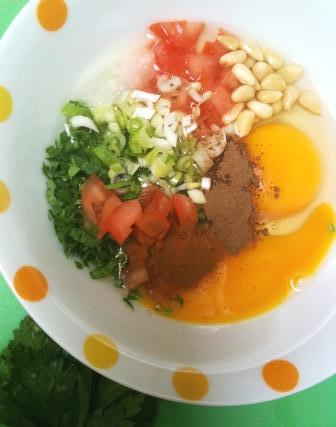
Lebanese Garden Omelet

  • 3 Omega-3 Eggs

  • 1-1/2 Tbs. parsley

  • 1 Tbs. finely chopped organic Green Onion

  • 2 Tbs. chopped organic Tomato

  • 2 tsp. pine nuts (opt.)

  • 1/4 tsp. allspice

  • 1/8 tsp. cinnamon

  • Dash of salt

Whisk all ingredients together in a bowl.

leb omelet2

Place a sauté or omelet pan over medium-high heat, and brush with organic ghee or olive oil to coat.

Wait 1 minute, then pour egg mixture into pan and as soon as edges begin to cook, lower to medium heat. After 2 minutes fold omelet in half and cook for one minute.

Flip on the other side and cook an additional 2 minutes, or until the center is set. (you can make a small slice to peek).

Serve with fruit, non-dairy cheese, cucumber or tomato slices and whole grain GF bread or Wasa crackers.

~ Sahtein! ♥