Quercetin

Quercetin belongs to a group of plant pigments called flavonoids that give many fruits, flowers, and vegetables their color. Fruits and vegetables, particularly citrus fruits, apples, onions, parsley, sage, tea, and red wine, are the primary dietary sources of quercetin. Olive oil, grapes, dark cherries, and dark berries, such as blueberries, blackberries, and bilberries, are also high in flavonoids, including quercetin.

Scientists have long considered quercetin, and other flavonoids, important in cancer prevention. People who eat more fruits and vegetables tend to have lower risk of some types of cancer. And animal and test tube studies suggest that flavonoids do indeed have anti cancer properties.

Quercetin and other flavonoids have been shown in these studies to inhibit the growth of cancer cells from breast, colon, prostate, ovarian, endometrial, and lung tumors.  One study even suggests that quercetin is more effective than reservatrol in terms of inhibiting tumor growth. Another found that frequent intake of quercetin rich foods was associated with lower lung cancer risk.

Recent studies suggest that quercetin may slow the growth of cancer cells and help foster apoptosis, a form of natural cell death that doesn't happen in most cancer cells. Some studies in animals show that quercetin may help protect against certain types of cancer, particularly colon cancer.

In addition to this, preliminary studies have also suggested that quercetin may be effective in protecting against prostatitis (inflamed prostate) and heart disease.

Of course Quercetin is available in higher amounts in supplements than would be found in food. It can be found in capsule or tablet form ranging in doses from 50 milligrams (mg) to 500 mg. There is no recommended standard dose for quercetin so talk to your medical practitioner about dosage.

Read more here.

Reduce Your Stress!

My personal feeling from observing friends and family that developed cancer, as well as myself, is that stress may be a trigger. One of the main pieces of advice given to cancer patients by most doctors is: reduce the stress in your life.

We may not be able to control stress, but we can manage it. Here are some stress-management tips that may help you feel:

  • Accept that there are things in our lives we cannot control.

  • Religiously guard your positive attitude; don't give in to the brain's defaulting to the negative. Repeat positive affirmations cheerfully and believe them!  ''I will make it through this'', "Nothing is worth feeling stressed about".

  • Halt stress in its tracks; if you feel overwhelmed, take a walk or a leisurely drive , or watch a funny movie or video.

  • Give yourself time to get things done. Manage the timing of events so you don't have to feel rushed.

  • Do things that bring you pleasure, reading, writing, walking or gardening are all good.

  • Spend 15-20 minutes each day sitting quietly. Learn and practice relaxation techniques like meditation, yoga or deep breathing.

  • Exercise for 30 minutes every day. You can bike, walk, hike, or work out. Your body handles stress better when it is fit.

  • Avoid alcohol and recreational drugs. And don't smoke.

  • Eat healthy, well-balanced meals.

  • Get enough rest and sleep. Your body repairs itself at night.

  • Reach out to supportive friends, and family. Invite them for a cup of tea.

Resource: Click here for article on Relaxation Techniques.

~ You will be fine! ♥

Broccoli, Cauliflower, Cabbage (Organic)

  These are all members of the cruciferous vegetable family which are notable for their high amounts of glucosinolates. Glucosinolates are a class of compounds that work by releasing two anticancer compounds, isothiocyanates and indoles. These are the active compounds that prevent the activation of carcinogenic substances and are of critical importance in fighting the spread of disease. Broccoli contains an anticancer phytochemical that increases the body’s ability to get rid of toxic substances linked to the development of cancer. It is also capable of inducing cancer cell death.  It is also believed to reduce the occurrence, number, and size of certain tumors. The Indole 3-carbinol (I3C) in broccoli, plays a role in reducing cancer growth in  cancers which are estrogen dependent, like uterine, breast and cervical cancers.

It is always important to buy fresh organic vegetables. To preserve the integrity of their anticancer properties, veggies should be either lightly steamed or stir-fried over medium heat in a little oil mixed with water.

Turmeric (Curcumin)

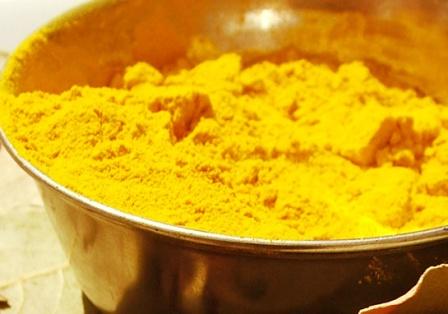
  Turmeric:  is a bright yellow spice that has an anti-inflammatory effect and demonstrates anticancer as well as antioxidant properties.

 Its primary active ingredient, curcumin, may be useful in the prevention and treatment of stomach, intestinal, colon, skin, and liver cancers. It has been found in studies, that curcumin blocks the growth of human tumors and prevents tumor angiogenesis which basically deprives the tumor of a nutrient source.

Turmeric may be quite useful in colon cancer because of its ability to reduce the levels of COX-2, the enzyme responsible for production of inflammatory molecules.

A teaspoon of turmeric added to soup, salad, or oatmeal is a quick and easy way to increase your curcumin intake. I will also post some dessert recipes (yes, ones that are in harmony with this diet) that use turmeric.

It should be noted that the body’s absorption of the curcumin increases by 2000% when you add black pepper!

The best Curcumin and the one used at M.D. Anderson is: Super Curcumin C-3 formula with bioperene.

On the Internet you can find 120 x 1,000 mg caplets sell for about $30.00, which is pro rated to 25¢ apiece. If you took six of these per day (3 doses of 2 caplets apiece) this would cost $1.50 per day.

~The new Mellow Yellow!

Egg, Veggie and Complex Carb Breakfast

Breakfast idea 1

Egg n Veggie

Here is an example of a healthy and tasty breakfast that follows the breast cancer diet guidelines: no dairy, no sugar, no simple carbohydrates and healthy omega3 fats.  Aim to make 1/2 your plate full of color (veggies), 1/4 protein and 1/4 complex carb.

Spinach cooked with a smattering of onions and seasoned with black pepper, salt, a touch of allspice and dry mint. I sprinkle probiotics on two of my meals to get 1/4 tsp a day.  Our tummy needs help processing foods properly many months after treatment.

Sprinkle a little black pepper or squeeze lemon in your green tea (4 -5 cups a day) to explode the antioxidant benefits! Also, freshly ground flax seeds sprinkled on your cereal or on foods is highly beneficial... per our list of Fantastic Foods.

Coconut oil has become my bread spread of choice.  Recent studies are astounding on the benefits of coconut oil.  Click here for more info.

~ Bon Appetit!

Four Cornerstones of Healing and Good Health

I can't think of a time when listening to our intuition and participating in our healing is more critical, than after being diagnosed with cancer.

During the first few weeks, while you adjust to the news it is important to choose an ally, someone close to you who is positive and available, to go to appointments with you and take notes, and to be your cheerleader.

Trust me... you will forget much of what is discussed while your mind sifts through a deluge of information and complex emotions.

It is also important to ask questions and go with your intuition when treatment or surgery recommendations are made.  Get a second opinion and research your options... contrary to what you may be told, you have quite a few.

I believe wholeheartedly that our reactions, our actions and our attitude have just as much, if not more, to do with our progression to good health than any other factor.

There are several links and post on this site that address the need to control our mind-body connection in a way that promotes recovery.

Over the past few years I have done considerable research on Complimentary and Alternative Cancer therapies.  My own experience with cancer led me to contact some of the leading respected CAM medical and nutrition practitioners in the country.

I consulted with several on Integrative approaches, since I believe that our body has immense capacity to aid the healing process if we help and allow it to.

'Allow it to' means to have faith in its wisdom, give it the nutrient support it needs to function optimally, enhance its repair processes by remaining positive and focused, listening to its prodding to make necessary changes or its warning about others.

The protocols suggested to me by the 5 CAM practitioners/researchers I had discussion with, had several things in common. Based on these fundamental suggestions, I worked out a diet/nutrition/lifestyle regimen that worked for me.

At first it was challenging to make the changes necessary, but I had the determination and willpower to keep at it until I found a rhythm that worked. Since I am an avid cook and ran a catering service for many years, coming up with recipes that met the nutrition guideline became a happy challenge!

If you go this route, you must believe in your heart that your protocol is as powerful as the medical therapies you may also receive.  In some cases exercise and diet changes offer patients greater benefit than traditional treatment.

If a body is not strong it will struggle to weather the toxic effects of Chemotherapy and Radiation, so it's important to know which supplements and foods will help counteract those effects, before, during and after treatment.

Clinical studies funded by the NIH have demonstrated that some spices, like Cinnamon, can help with Type II Diabetes and actually enhance the benefits of Chemotherapy. And in the case of Cinnamon .. be more powerful in tumor cell death than Chemo drugs!

The four cornerstones of optimal health are:

1. Diet / Nutrition / Lifestyle

2. Stress Reduction

3. Mind-body health

4. Supplements / Homeopathy

Read about each by clicking on the titles.

~ Be Well.

Stop Sugar Cravings with These Two Trace Minerals!

Even though I am 'sugar-free', I still get a craving for chocolate or something sweet now and then, and have to whip up something healthy to satisfy it... berry compote with birch Xylitol, or flax-seed pancakes with cinnamon/Stevia topping.

Stop Sugar Cravings with These Two Trace Minerals

by: Danica Collins

If you frequently crave candy bars, doughnuts, cake, or other sugary foods — and you thought your cravings were just something you were born with, or a condition to which you are naturally or genetically predisposed, there is hard scientific evidence that suggests how you can stop sugar cravings.

There is a condition called pica, which triggers the cravings — and it is caused by mineral deficiencies.

An example of pica in the animal world is seen in young calves that are raised for veal. These calves are deficient in iron. They are put into cages soon after birth and purposely fed a diet that is iron-poor so that they grow to be anemic. Anemic calves produce the pale, tender meat that makes veal desirable to food enthusiasts. The iron-starved calves have been known to seek, lick and chew on the iron nails of their cages in an effort to satisfy their hunger for iron. (Although we do not support such cruelty to animals, this example is presented merely to illustrate the nature of pica in animals.)

In humans, an extreme example of pica is seen in pregnant women, who often crave things like ice cream or pickles, and especially non-food items like laundry starch, clay or dirt. This is because the fetus inside a pregnant woman absorbs much of the minerals from the woman’s body causing her to have a craving for something that will satisfy her mineral deficiency.

Pica has become such a common condition primarily because our demineralized soils yield mineral-poor produce. Additionally, food processing robs food of important nutrients, and this contributes to the prevalence of pica — especially among people with unbalanced diets such as dieters, vegetarians, meat eaters, teenagers, children and seniors. The cravings are a symptom of mineral deficiencies in the diet.

How to stop sugar cravings with minerals

When you crave sweets, eating highly sweetened food such as doughnuts and chocolates may temporarily satisfy your sugar cravings — but it does very little to alleviate the mineral deficiency, which is the underlying cause of the cravings. Studies show that sugar cravings are linked to a deficiency in the trace minerals, chromium and vanadium.

It is scientifically proven that both chromium and vanadium help in normalizing blood sugar. Both trace minerals have been shown to be essential for normal glucose metabolism. This is the reason why they have also been used to prevent and cure diabetes (high blood sugar) and hypoglycemia (low blood sugar).

A chromium deficiency has been shown to not only cause cravings for sugars or starches, but also contribute to poor muscle tone, which makes weight loss even more difficult. To help curb sugar cravings, many health practitioners prescribe a daily intake of both chromium and vanadium, preferably taken in ionic/water-soluble form for maximum absorption. Many health food stores carry ionic minerals. You can also type the keyword “ionic minerals” on any search engine to find online retailers, such as the WaterOz company, which manufactures high quality chromium and vanadium formulations.

Chocolate cravings, in particular, are curbed by magnesium supplementation. Magnesium is also contained in commercially available ionic/water-soluble mineral formulations.

Read more:

http://undergroundhealthreporter.com/stop-sugar-cravings-with-two-minerals#ixzz223jMm3Wd