Are You a Bean? or ... the Lentil Love Affair

Da Facts

The lentil (Lens ensculenta) is a legume that grows in pods containing one or two lentil seeds.  They are believed to have originated in central Asia.

Lentils have been eaten by humans since Neolithic times and were one of the first domesticated crops.  In the Middle East, lentil seeds have been found dating back more than 8000 years.

In the Old Testament, Esau gives up his birthright to Jacob in exchange for a bowl of lentil soup. The Greek playwright Aristophanes called lentil soup the "sweetest of delicacies." Lentils have been found in Egyptian tombs dating as far back as 2400 BC.

In India, the lentil is known as dal or daal. For many centuries, lentils were considered to be "the poor man's meat." In Catholic countries, those who couldn't afford fish would eat lentils during Lent instead.

There are many varieties and colors of lentils, including brown, yellow, black, orange, red and green.  Beluga lentils are black and one of the smallest varieties of lentils, having an appearance similar to caviar.
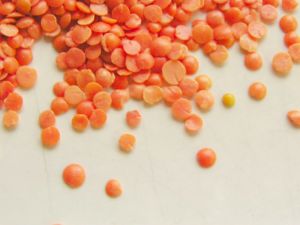
French green lentils are small, delicate, and flavorful and hold their shape after cooking better than many other types of lentil. The most common lentils used in the United States are green and brown, since these varieties are best at retaining their shape after cooking.

The optical lens is named after the Latin word for lentil, lens. Unlike most other beans, lentils don't need to be soaked before cooking.

More Facts

With about 30% of their calories from protein, lentils have the third-highest level of protein, by weight, of any legume or nut, after soybeans and hemp. Proteins include the essential amino acids isoleucine and lysine , and lentils are an essential source of inexpensive protein in many parts of the world which have large vegetarian populations.

Lentils are deficient in two essential amino acids, methionine and cysteine. However, sprouted lentils contain sufficient levels of all essential amino acids, including methionine and cysteine.

Lentils also contain dietary fiber, folate, vitamin B1, and minerals. Red (or pink) lentils contain a lower concentration of fiber than green lentils (11% rather than 31%). Health magazine has selected lentils as one of the five healthiest foods. Lentils are often mixed with grains, such as rice, which results in a complete protein dish.

   References:

Randy Sell. "Lentil". North Dakota State University Department of Agricultural Economics. Archived from the original on 2009-06-21. Retrieved 2011-12-14.

Raymond, Joan (March 2006). "World's Healthiest Foods: Lentils (India)". Health Magazine.

Da Story

As a child and up to now, lentils have been one of my favorite beany legumes! There are two traditional Lebanese lentil dishes that Mom made quite often, and that I devoured... 1) Mjaddara : a lentil and rice mash that is better than chocolate fudge; and 2) Shawrabit Adas: 'Lentil Soup' with Swiss Chard and Cumin.

Both dishes were on the Top of my Comfort Foods list.  On wintry days when I visited my Uncle Yusef's house where Tehta (Grandma) lived, we'd huddle around their kerosene stove in the 'winter room', sitting on long cushions that bordered the wall, and eat bowls of Mjaddara with pita bread, pickles and shredded cabbage salad. My 3 cousins and I would listen to the adult conversations, poking fun at whoever was featured in each story, or play silly word games.

Lentils are versatile.  You can add them to salads, to chilies, and soups.

Click on the Recipe Names to go to the recipes.

~ Sahtein!

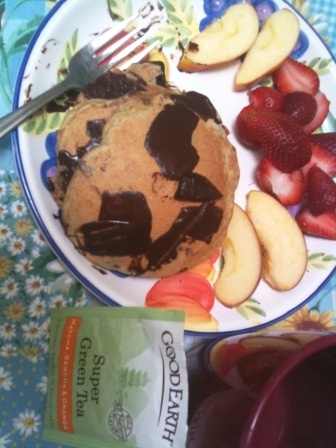
Berry Lemon Zest Pancakes - High Fiber

What better way to start the weekend than with a treat.  I don't often indulge in a mostly carb breakfast, but once a week, a high-fiber-carby-yummy treat is good for the soul...and that's good for the body.


I chopped some of the strawberries into the batter...added 1 Tbs. of flax-seed to the already hi-fiber buckwheat mix, an egg, the blueberries and 1 tsp. grated lemon zest.

Oh, and instead of milk I use Almond milk.


Oops! I forgot to show you the bar of 85% dark chocolate! Well, that's in the next photo...but I used 1 ounce to melt on and between the hotcakes.


Add the green tea with pepper and probiotics sprinkled on the rest of the strawberries, and you're ready to soothe the beast within!

P.S. If you like your cakes a little sweeter, use Farmer John's Maple Syrup made with Xylitol.

~ Cheers!


Breast Cancer Diet - Do's and Dont's

The following is a preview of the recommended diet for people who are currently overcoming breast cancer, or who are survivors and wish to stay cancer free.  This is based on the suggested diet I received from the integrative therapy professionals I discussed in 'My Journey Part I' post under “About”.
I feel it is important to think of our diet as a treatment, just as you would chemotherapy or any other therapy...don't tamper with foods on the No list, don't think it's OK to cheat for a day or two. Think of this as your long term cure.  So, give it respect and it may give you life!
That's my intuitive understanding of our mind-body work.  What you wholeheartedly believe, your mind will believe, and it will work to bring that belief into reality. If your mind-body feel you lack faith in what you're doing or thinking, you lose the majority of the beneficial effect, if not all.
After a couple of weeks it will become easier to stop thinking about missing this or that food. Think of cravings as your old ignorant cells talking.  If you have or had cancer treatments, your body is transforming.  Many cells that were part of your body have been shed, and you are creating fresh, un-programmed ones as you move towards new health.
I feel we are reinventing ourselves on more than one level during a healing process.  And wouldn't it be interesting if that's the role of cancer in our lives? By creating a fresh new cellular structure, it enables us to let go of old habits and beliefs that were programmed in them, and pushes us to new heights and depths of understanding...and challenge us to stay there!
I know my thinking has undergone a shift, and my body and the way I think of it sure have as well.
Below is a starter list of Yes and No foods for breast/prostate cancer.  If you'd like a comprehensive list with menu ideas, please write to me.

YES Foods:

  • All Vegetables except white potatoes: every color, raw or lightly cooked
  • Legumes/Beans: garbanzo, adzuki, black, lentil, kidney, lima beans, green beans...
  • Whole grains: barley, oats, rye, whole wheat...
  • Animal Protein: Omega 3 organic eggs, 4 oz. organic white meat chicken, 3 oz. grass-fed beef, all wild-caught cold water fish, very little organic butter (not heated)
  • Dairy substitutes: Almond or Rice milk, soy milk in moderation (especially if you have estrogen based cancer)
  • Spices: all of them
  • Nuts/Seeds: All except peanuts and cashews.  Make sure you only buy dry-roasted nuts

NO Foods:

  • All Dairy except Whey protein
  • Non organic vegetables and fruits
  • Processed foods
  • Sweeteners: Sugar, artificial sweeteners, honey, agave..
  • Simple carbs: white flour, rice flour, white potatoes, starchy food, rice, cornmeal (unless mixed with high fiber flour for baking), most boxed cereals (choose low sugar, high fiber)
  • Beverages: sweetened drinks, drinks with food coloring, caffeinated beverages (teas are an exception)
  • Fried foods
~ Get creative!