Quinoa Salad with Lime Dressing

Quinoa is a high quality protein, that is also high in iron. Quinoa, once called “the gold of the Incas, is an amino acid-rich (protein) seed that has a fluffy, creamy, slightly crunchy texture and a somewhat nutty flavor when cooked. Quinoa is a complete protein containing all eight essential amino acids.

Ingredients

2 c. water 1 c. uncooked red quinoa 2 organic scallions, chopped 1 stalk organic celery, finely chopped 1/2 organic apple with skin, finely chopped 2 Tbs. organic parsley, chopped 2 Tbs. virgin olive oil 1 Tbs. lime juice 1 tsp. cumin 1/2 tsp. salt

Combine water and quinoa in a medium saucepan. Bring to a  boil. Reduce heat' simmer, covered, 10-12 minutes or until water is absorbed. Stir. Cover and let stand for 15 minutes.

Transfer to a large non-metal bowl, and set aside.

Add apple and veggies to quinoa and toss.

Combine oil, lime juice and spices, whisk until blended.  Pour over salad and toss again.

Makes 6 - 8 servings

~Guten Appetit!

Fruity Coleslaw

This is a refreshing warm weather salad.  It has good for you low-sugar fruits, and our cruciferous friend the green cabbage.  4 cups or 1 16 oz. package shredded green organic cabbage 2 carrots, grated or strips 1 Granny Smith organic apple, cut into matchsticks 1 just ripe organic pear,  cut into matchsticks 1 c. sliced organic strawberries 1/3 c. lemon juice 2 Tbs. Vegenaise 1 Tbs. Xylitol or 2 packets Stevia 2 tsp. poppy seeds 1 tsp. Dijon mustard 1/2 tsp. salt

Combinethe cabbage and fruit in a large bowl.  Whisk lemon juice and the rest of the ingredients in a small bowl.

Pour dressing over slaw and toss gently.  Serve immediately.

Makes about 7 cups

~ Buon appetito!

Curried Quinoa and Greens with Coconut Dressing

This recipe contains ingredients that enhance Cellular Damage Control! Quinoa contains the amino acid lysine, which is essential for tissue growth and repair.

Quinoa, once called "the gold of the Incas, is an amino acid-rich (protein) seed that has a fluffy, creamy, slightly crunchy texture and a somewhat nutty flavor when cooked. Quinoa is actually a relative of leafy green vegetables like spinach and Swiss chard.

The recipe below adds Kale, another 'fantastic food'.

One cup of kale contains 36 calories, 5 grams of fiber, and 15% of the daily requirement of calcium and vitamin B6, 40% of magnesium, 180% of vitamin A, 200% of vitamin C, and 1,020% of vitamin K. It is also a good source of minerals copper, potassium, iron, manganese, and phosphorus.

Kale’s health benefits are primarily linked to the high concentration and excellent source of antioxidants, and sulphur-containing phytonutrients. If you make the recipe with Green Tea instead of the other suggested liquids, you'll dramatically increase the Antioxidant benefits!

Curried Quinoa and Greens

Makes 6-7 servings about ½ c. each

  • 2/3 c. red Quinoa
  • 2-½ c. Water, Green Tea or no-sodium Veg Broth
  • 3 c. young Kale, lower stems removed, and chopped into bite size pieces
  • 1 tsp. Curry powder
  • Pinch Sea Salt

Coconut Dressing

  • 3 Tbs unsweetened light Coconut Milk
  • 2 tsp. fresh squeezed Lime juice
  • ¼ tsp. Curry powder
  • 1/2 tsp. Stevia
  • ¼ c unsalted, dry roasted Almonds

Toast the quinoa for 5-6 minutes in a 4-quart sauté pan over med heat, until fragrant, gently stirring from time to time.  Add water or broth, kale, curry and salt; cover and raise temp to high.  Bring to a boil.

Lower heat and simmer until the quinoa and kale are tender, the quinoa ‘tails’ have popped, and liquid is absorbed, about 15 mins.

Remove pan from heat and transfer mixture to a large bowl.

In a small bowl, place the coconut milk, lime juice, ¼ tsp. curry and stevia, and whisk together briskly.  Pour the coconut mixture over the quinoa and toss to combine.  May be served warm, or chilled.

Sprinkle with almonds just before serving.

~ Bon Apetit!

Watercress, organic

Here's a surprise...even though it may appear to be a shy little green plant, watercress is grouped in the cruciferous vegetable family (like cabbage and broccoli). It packs the power of Glucosinolates, compounds that cause the release of watercress’ primary anticancer compound, phenethyl isothiocyanate (PEITC).  PEITC has been found to protect against cancers of the esophagus, stomach, and colon, as well as lung cancer. It has also been found to exhibit great toxicity against cancer cells from leukemia, colon, and prostate cancer.

"Molecular oncologist Professor Graham Packham and colleagues at Britain’s University of Southampton studied a small group of breast cancer survivors, who underwent a period of fasting before eating 80g of watercress and then providing a series of blood samples over the next 24 hours. Results showed that ingestion of watercress led to a rapid rise in plasma levels of ... (PEITC)."  Read full article here.

And you thought it was just a pretty garnish!  Add generously to your salads, sandwiches and sauces!

~ Greenly yours!

Thai Yellow Curry Paste

By now you're sure to know that Curry is a food we are encouraged to eat frequently. The ingredient that gives it its lovely yellow-ish color is Turmeric, containing the powerful Antioxidant, Curcumin. Read about this amazing, healing spice here.

Thai Yellow Curry Paste

  • 1-2 red or Green chilies, or 1/2 to 1 tsp. Cayenne pepper
  • 2 organic Shallots (or 1 small onion)
  • 1 thumb-size piece Galangal root or Ginger, sliced
  • 3-4 large cloves Garlic
  • 1 tsp. ground Coriander
  • 1 tsp. ground Cumin
  • 1/2 tsp. whole Cumin seed
  • 1/8 tsp. fresh Nutmeg, or substitute cinnamon
  • 3 Tbsp. Fish sauce (available at Asian stores)
  • 3/4- 1 tsp. Turmeric
  • 1 Tbs. Xylitol or 2 tsp. Stevia
  • 1-2 fresh or frozen Kaffir Lme leaves, snipped into small pieces with scissors (discard central stem), or substitute bay leaf
  • 1 -14 oz. can Coconut Milk
  • 1 Tbs. fresh Lime juice
  • 1 Tbs. organic Ketchup

Toss all in food processor and blend. Refrigerate.

~ Easy peasy! ♥

And What About Copper?

I have to watch my intake of copper, and take 2 supplements to keep it in check. I have been advised to avoid Shellfish, Peanuts, Cashews and other copper-heavy foods. I don't use copper utensils for food.  I recently tossed out my water kettle because I realized it has a copper bottom! Every 3 -5 months I have a Ceruloplasmin blood test to check my copper level. Why? you may ask. Well, here are two sources with a little more information, and links to the full articles.

1. The Role of Copper in the Angiogenesis Process - from: cancerprotocol.com

Copper is believed to be the switch that turns on the angiogenesis process in tumor cells. It has been observed that abnormally high serum copper levels are found in patients with many types of progressive tumors.

According to the University of Michigan Oncology Journal, many studies have shown copper to be an obligatory co-factor in the process of angiogenesis. Growth factors in angiogenesis require binding to copper in order to function properly. As stated in Steven Brem's research at the Moffitt Cancer Center, linked below, "copper-binding molecules [ceruloplasmin, heparin, and tripeptide glycly-histadyl-lysine] are non-angiogenic when free of copper, but they become angiogenic when bound to copper."

On January 21, 2000, the University of Michigan reported that researchers had "successfully stopped the growth and spread of cancer by depriving the tumors of the copper supply they need to form new blood vessels." Dr. George Brewer used an inexpensive compound called tetrathiomolybdate (TM) to lower the serum copper levels in patients with cancer.

This study was done with a group of 18 patients in hospice with 11 different types of metastatic cancer. The goal of the study was to reduce ceruloplasmin to 20% of baseline for at least 90 days. The treatment achieved this goal in 6 patients, and 5 of those patients have seen no tumor growth or new tumors for more than 2 years. The other 12 patients could not achieve the target copper levels, suggesting that it can take more than a month to reduce copper levels to target, during which time the cancer may progress rapidly." -  Read full article here.

2. What is the evidence?  -  from : http://www.cancer.org

Copper is a trace mineral that is needed for many important body processes. Animal studies have shown that copper is useful in maintaining antioxidant defenses. Antioxidants block the actions of free radicals, which are activated oxygen molecules that can damage cells. While the role of copper in the cancer process is still unclear, copper complexes have been shown to have anti-cancer properties in laboratory studies.

Other laboratory and animal studies suggest that high copper levels may be linked to liver cancer and brain tumors. More recently, many studies have shown that patients' blood copper levels are higher in several types of cancer and other diseases. To add to the confusion, blood tests can show high copper levels even when there is little copper in the tissues. These high copper levels may be due to injury, disease, or inflammation. Because copper levels in the blood do not always reflect nutritional status, it's hard to design or find good studies of copper.

Copper is needed to form new blood vessels, and because cancer needs new blood vessels in order to grow, some researchers are lowering copper levels to see if it will help slow tumor growth. In effect the researchers are trying to use low copper levels to starve the tumor of nutrients by keeping it from building new blood vessels (anti-angiogenesis). One group of researchers looked at whether a copper-lowering drug, tetrathiomolybdate (or TM), could help patients with advanced kidney cancer. Some patients' cancer stopped growing during the 6-month treatment period. A few people had low white blood counts during treatment, requiring that treatment be stopped until they recovered. This was a small study, and further research is needed to find out whether copper can help more people with advanced cancer -  Read the full article here.

~ Be Well!

Lower Blood Sugar with These Foods

Elevated blood sugar levels are associated with inflammation, tumor proliferation, decrease in immune function, and angiogenesis.

Angiogenesis plays a critical role in the growth and spread of cancer. A blood supply is necessary for tumors to grow beyond a few millimeters in size. Tumors can cause this blood supply to form by giving off chemical signals that stimulate angiogenesis.

Thankfully, there are many foods that help lower our blood sugar.  There are also tactics you can use to keep your blood sugar in check:

1. Avoid refined, low fiber carbs and sweets

2. Choose whole grain foods that offer more than 1-gram of fiber for every 10-grams of Carbs (the Good Carb Formula.)

3. Avoid eating carbs alone especially on an empty stomach! Add a protein or healthy fat to balance blood sugar (almond butter, coconut oil, sardines, light meat tuna, almond cream cheese,etc.)

Eat more of these. . .

  • Apples, Red with Peel
  • Apple cider vinegar
  • avocadoAvocados
  • Barley
  • Black Beans
  • Blueberries
  • Chamomile tea
  • Chard
  • Cherries
  • Cinnamoncinnamon
  • Flax-seed Meal
  • Garlic
  • Goji Berries
  • Green tea
  • Leeks
  • Lemon
  • Parsley
  • Nuts
  • Oat Bran
  • Olive oilraspberry
  • Onions
  • Raspberries
  • Seeds
  • Sweet potato
  • Yams

~ Cheers!

'Curl up with a Book' Dairy Free Hot Chocolate

Yes, there are treats we can have on this diet!  Just gotta stay in the guidelines... :o) If you want a sweeter version you may add 2 tsp. Xylitol or a packet of Stevia.

  • 1 can unsweetened Coconut or Almond Milk
  • 1-1/4 oz. finely chopped Dark Chocolate (75% cocoa+)

Heat milk in small pot until hot - not boiling.  Add chocolate and stir until it is completely melted.  Sprinkle with Cinnamon. (opt.)

~ Yum!

Knockout Cannellini Bean Soup with Kale

Very yummy, filling and worth adding to your Recipe files!  This can be made with Organic Free-Range Chicken Broth if desired.

Cannellini Bean Soup with Kale

Serves 6.

  • 1 Tbs. extra virgin Olive Oil
  • 1 1/2 c.  organic Onion, diced
  • 1 c. Celery, diced
  • 1 c. organic Carrot, diced (1 cup)
  • 1 tsp. fresh Rosemary, finely chopped (or 1/2 tsp. dried)
  • 1 tsp. fresh organic Basil (1/2 tsp. dry)
  • 1 Tbs. of chopped Garlic (about 3 cloves)
  • One 14.5 oz can organic diced Tomatoes
  • 1/2 tsp. Cumin
  • 4 c. organic Vegetable Broth
  • 1 Bay leaf
  • 4 packed cups organic Kale, cleaned and sliced
  • Two 15 oz cans Cannellini beans
  • 1 Tbs. fresh Lemon Juice
  • 3 Tbs. of grated Rice or Almond Cheese

Pour olive oil in stock pot over medium heat and wait 1 minute. Add the onion, celery, carrots, rosemary and basil, and sauté over low to medium heat for 5 minutes, stirring frequently. Add garlic and cook another minute.

Add tomatoes, cumin, vegetable broth and bay leaf. Bring to a boil then reduce heat, cover and simmer for 10 minutes.

Wash the kale well. Remove and discard the lower half of stalk, then slice. Add kale and beans to the pot, bring back to a low boil and simmer, covered, until kale is tender (about 5 to 10 minutes).

Turn off the heat, remove bay leaf, add lemon juice and salt and pepper to taste.

Top each bowl of soup with 1/2 tablespoon rice or almond cheese if desired. Serve with a nice whole wheat loaf of crusty, whole grain bread. (I like Trader Joe's Tuscan Whole Wheat Tuscan Pane - 4g fiber to 23 carb). Click here for 'good carb' formula.

~ à votre santé!

PowerUp Cereal n Berry Breakfast, Good Carb Formula

Good morning! This is a lazy day I can tell. Sleep played hide-n-seek with me last night, so feeling mellow.

I poured 1/2 c. of high fiber cereal into a bowl, sliced organic strawberries, chopped a two inch strip of organic lemon rind and tossed it in, poured almond milk over all and then sprinkled freshly ground flax-seeds to top it off.

That is a bowl full of nature's magic!... high fiber, healthy fat from flax seeds and more fiber, super anti-oxidant berries and lemon peel, and healthy fat in almond milk.

Note: When you shop for cereal make sure it has less than 4g of sugar per serving.  Also, it's critical that you calculate the Fiber to Carb ratio. You don't want to spike your blood sugar...that's the critical consideration when eating carbs.

Good carb formula: Multiply the fiber by 10.  It should exceed the carb count.  For example Trader Joe's High Fiber Cereal (that's what it's called!)  has 23g of carbs and 9g of fiber per serving.  That means the ratio is  (9x10 to 23) 90 fiber to 23 carb! An excellent choice.

If it had 3g of fiber the ratio would have been 30 fiber- 23 carb, kinda ok but not so great.

~ PowerUp!

Bulgur Wheat Pilaf

'Bulgur' is the Westernized pronunciation of the word Burghul (spoken with a guttural 'g') . . . an Arabic word meaning 'made of tiny chunks'. Bulgur is commonly used as a cradle for stews, as a side dish with chicken or grilled meats.  It is added to some salads, like Tabbouleh, and in ground meat dishes like Kibbeh.

Whole wheat bulgur has enough fiber to be on our healthy diet. You still want to limit your intake to about a 1/2 c. per meal.

Bulgur wheat pilaf is a tasty substitute for rice, and much healthier.  Only gaba sprouted rice comes close in nutrition.  If you have a wheat allergy, then gaba rice can be used instead. I buy the latter in bulk from Amazon.

This dish is sometimes cooked with a handful of garbanzo beans. The two compliment each other.

Bulgur Wheat Pilaf

  • 1 Tbs. virgin olive or expeller pressed Coconut oil
  • 1 1/2 c. coarse grind, whole wheat Bulgur, rinsed
  • 1 small organic white Onion, finely chopped
  • 1 Tbs. organic Tomato paste
  • 2 c. Boiling water or hot Green Tea
  • 1 tsp. Sea Salt
  • 1/4 tsp. Allspice
  • 1/4 tsp. Cinnamon

Place medium size pot over medium heat for 1 minute.  Add oil and wait 2 minutes.  Add onions and stir until they are translucent.  Onions should not sizzle very much.  If they do, turn heat to med-low.

Add bulgur wheat and stir for 1 minute. Mix tomato paste with 1/2 c of the boiling water, and add to pot. Add the rest of the water and the salt and spices.

Stir once, cover, turn heat to low and simmer until liquid is absorbed, about 12 - 15 minutes.

Good served with stews or alongside a healthy chicken or fish dish.

~ Sahtein! 

Breast Cancer Diet - Do's and Dont's

The following is a preview of the recommended diet for people who are currently overcoming breast cancer, or who are survivors and wish to stay cancer free.  This is based on the suggested diet I received from the integrative therapy professionals I discussed in 'My Journey Part I' post under “About”.
I feel it is important to think of our diet as a treatment, just as you would chemotherapy or any other therapy...don't tamper with foods on the No list, don't think it's OK to cheat for a day or two. Think of this as your long term cure.  So, give it respect and it may give you life!
That's my intuitive understanding of our mind-body work.  What you wholeheartedly believe, your mind will believe, and it will work to bring that belief into reality. If your mind-body feel you lack faith in what you're doing or thinking, you lose the majority of the beneficial effect, if not all.
After a couple of weeks it will become easier to stop thinking about missing this or that food. Think of cravings as your old ignorant cells talking.  If you have or had cancer treatments, your body is transforming.  Many cells that were part of your body have been shed, and you are creating fresh, un-programmed ones as you move towards new health.
I feel we are reinventing ourselves on more than one level during a healing process.  And wouldn't it be interesting if that's the role of cancer in our lives? By creating a fresh new cellular structure, it enables us to let go of old habits and beliefs that were programmed in them, and pushes us to new heights and depths of understanding...and challenge us to stay there!
I know my thinking has undergone a shift, and my body and the way I think of it sure have as well.
Below is a starter list of Yes and No foods for breast/prostate cancer.  If you'd like a comprehensive list with menu ideas, please write to me.

YES Foods:

  • All Vegetables except white potatoes: every color, raw or lightly cooked
  • Legumes/Beans: garbanzo, adzuki, black, lentil, kidney, lima beans, green beans...
  • Whole grains: barley, oats, rye, whole wheat...
  • Animal Protein: Omega 3 organic eggs, 4 oz. organic white meat chicken, 3 oz. grass-fed beef, all wild-caught cold water fish, very little organic butter (not heated)
  • Dairy substitutes: Almond or Rice milk, soy milk in moderation (especially if you have estrogen based cancer)
  • Spices: all of them
  • Nuts/Seeds: All except peanuts and cashews.  Make sure you only buy dry-roasted nuts

NO Foods:

  • All Dairy except Whey protein
  • Non organic vegetables and fruits
  • Processed foods
  • Sweeteners: Sugar, artificial sweeteners, honey, agave..
  • Simple carbs: white flour, rice flour, white potatoes, starchy food, rice, cornmeal (unless mixed with high fiber flour for baking), most boxed cereals (choose low sugar, high fiber)
  • Beverages: sweetened drinks, drinks with food coloring, caffeinated beverages (teas are an exception)
  • Fried foods
~ Get creative!

Citrus Fruits (Organic)

Studies have proven that eating citrus fruits is associated with a decrease in cancer development. This is particularly true in digestive tract cancers, those of the pharynx, esophageal, mouth, and stomach. Recent studies have found that children who consume orange juice in the first two years of life have a decreased risk of leukemia.

Squeeze lemon juice in warm water and drink before a meal, or use in salads or on veggies.  Eating the rind of organic citrus fruit is highly recommended. I don't mind munching the rind plain. If that doesn't tickle your fancy, you can grate it and add to soups, salads, muffins, salsa, tea...

Lemon juice creates an alkaline environment in our bodies. Most cancers and bacteria can't thrive in an alkaline body. The guiding principle used by the immune clinic I speak of and spent three weeks at in Southern California, is keeping the body alkaline to reverse or halt cancer in their patients.

The phytochemicals in citrus fruits block tumor growth by direct action, restricting their ability to reproduce. Also citrus fruits may have effect on the body’s modulation of carcinogenic substance detoxification.

If you have or had cancer, then only moderate you consumption of oranges and orange juice is recommended since it is high in sugar, but no limit to the consumption of lemons!

~ Pucker up!

Fasoulia (Lima Bean Stew)

This is one of my all-time favorite comfort foods! Mom made Fasoulia practically every other week, because we loved it. It's the Lebanese equivalent of Chili, except we serve it over rice. I often omit the meat for a tasty vegetarian version. Traditionally either Lima or Pinto beans are used, but my family ask for Kidney beans.

This recipe is high in fiber and protein, and is rich in lycopene...a cancer fighter, especially for prostate cancer.

Fasoulia or Lebanese Lima Bean Stew

  • 1 Tbs. extra Virgin Olive Oil
  • 1 medium white organic Onion, chopped
  • 6 oz. grass-fed Beef or Lamb, cut into 1/2" cubes (omit for Vegan version)
  • 1 1/2 c. boiling Water or hot Green Tea
  • 4 cups organic Lima, Kidney or Pinto beans (boiled or canned)
  • 2 Tbs. organic Tomato Paste
  • 1 tsp. Allspice
  • 1/2 tsp. Cinnamon
  • 1/4 tsp. Black pepper
  • 1 - 1-1/2 tsp. Sea Salt (to taste)
  • 1/4 tsp. Cayenne Pepper (optional)

Place medium size pot over medium heat for 1 minute. Add olive oil to pot and wait 2 minutes. Add the onion and gently saute, stirring, until they turn translucent. (Remember to turn heat down a little if the onions start to really sizzle, we don't want to burn the oil.)

Add the cubed meat, and stir until meat is no longer pink on the outside. Add boiling water, cover and simmer on low heat for 25 -30 minutes, until meat is tender.

Add the beans, tomato paste and spices.  Return heat to medium.

If needed add another 1/2 c. of water to keep liquid level with beans. Stir well. Once stew begins to bubble, cover and simmer for another 20 minutes. Taste and adjust salt.

Serve over Brown and Wild Rice or Whole Wheat Bulgur Pilaf.

~ Sahtein (double health)! ♥

Cinnamon - The King of Antioxidants

Cinnamon has the highestanti-oxidant strength of all the food sources in nature!

1/4 tsp. of Cinnamon provides 1/4 of the antioxidants you need in a day.

Although there are four main varieties of cinnamon, Ceylon cinnamon and Cassia cinnamon are the most popular.  Ceylon cinnamon is sometimes called true cinnamon. It is more expensive and has a sweet taste. Ceylon cinnamon is sold in specialty stores.  Most cinnamon sold in supermarkets in North America comes from the less expensive variety, Cassia cinnamon.

In traditional Chinese medicine, Cassia cinnamon is used for colds, flatulence, nausea, diarrhea, and painful menstrual periods. It's also believed to improve energy, vitality, and circulation and be particularly useful for people who tend to feel hot in their upper body but have cold feet.

In Ayurveda, cinnamon is used as a remedy for diabetes, indigestion, and colds, and it is often recommended for people with the kapha Ayurvedic type.

  • The active compounds in cinnamon are known to have anti-diabetic, anti-septic, local anesthetic and anti-inflammatory properties.
  • Cinnamaldehyde in cinnamon-sticks has been found to have anti-clotting action, and may help prevent stroke and coronary artery disease.
  • This spice may increase the motility of the intestinal tract.
  • It contains  vitamin A, niacin, pantothenic acid, and pyridoxine.
  • Cinnamon is an excellent source of flavonoid phenolic anti-oxidants.
spice-1027958_640.jpg

Cinnamon may help or treat:

  • Type II Diabetes
  • Heart Disease
  • Ulcers
  • High Blood Pressure
  • Stroke
  • Polycystic ovarian Syndrome
  • Yeast infections
  • Food Poisoning

Sprinkle on toast, cereal, soups, and berries. Add to stews and rice dishes.

~ Tastefully yours ♥

Walking Around the Garden this Morning

My L-shaped back yard is undergoing slow re-landscaping! This mean my boyfriend and I are doing the work when we can. Walking in the yard, even in its transitional phase, is soothing and grounding. Birds are frequently twittering in the plentiful trees in our neighborhood, and as of yesterday a couple is building a nest under the little metal awning over our kitchen window. They've been very busy this morning.

I noticed the mint patch needed weeding, so I decided to do it right then.  I pulled the pesky grass and sticky weeds up, enjoying the sound of our wind chimes playing tunes with the light breeze.

A few truant branches from our neighbor's plum-tree, dangle their limbs over the fence. Another favorite of mine.. sour plums! They are a street-vendor food in many Mediterranean countries, sold with a twisted corner of newspaper containing salt.

mulberry
mulberry

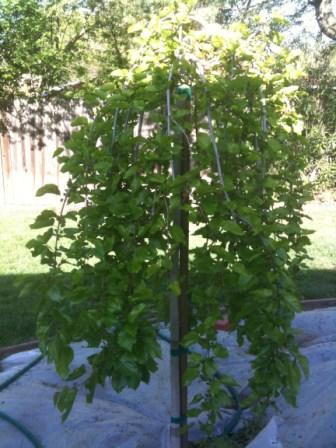
One of my fondest childhood memories is climbing up my Uncle Yusef's fruit-laden mulberry tree with my 3 cousins, and within minutes getting tattooed with purple splotches. When they are still white they actually have a flavor, unlike any I can describe. Well, this year my sweetheart, who has heard the mulberry tree story more than once, surprised me with this weeping mulberry. Isn't it darling?  Next year I hope to be covered in purple!

The parsley plants against the house are rather perky this morning.  We had an amazing rainfall last week, and they apparently enjoyed it. And from the looks of it, so did the sage.

sage
sage

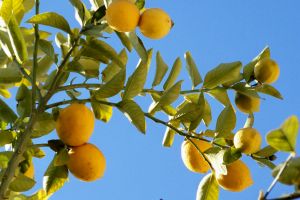
Yesterday I asked my son to grab what ever lemons were left on our trees, and he brought me 6.  This crop is almost all gone but I was sure there were more than 6 left.  I was right. He's so tall that I don't think he remembers to look low for stuff!

fresh lemons
fresh lemons

I was able to reach most of the Meyer lemons that were left; some can stay on the branches for another week.  I noticed that new lavender and white buds dotted the trees.  They are amazingly prolific.

Even if you're not into gardening, put a chair in your back yard and chill with a book or a glass of cold minted green tea (or hot depending on the climate!), and let nature do its magic on your mind, body and soul.  It will, you know.

~ Cheers! ♥

5 Things You Can Do Now to Improve Your Health

Many illnesses, including many cancers, cannot thrive in an alkaline environment. The American diet is extremely acidic...commercially raised red meat, coffee, sugar, fried foods and simple carbs... those make up the overwhelming majority of what we eat.

The components of what you put in your mouth and on your skin has to processed by your liver. This much abused organ is already working overtime to rid your body of toxins that you breathe and get on your skin ...household cleaners, register tape, etc..

FYI - 40 percent of cash register receipts printed on heat-activated paper have been found to contain the dangerous chemical Bisphenol A (BPA)!

I'm going to take just one from a very long list of dubious ingredients that we are commonly used in lotions, deodorants and makeup, namely: castor oil.

Castor oil and its derivatives are used in the manufacturing of soaps, lubricants, hydraulic and brake fluids, paints, dyes, coatings, inks, cold resistant plastics, waxes and polishes, nylon, pharmaceuticals and perfumes.

The castor seed contains ricin, a toxic protein.  Allergenic compounds found on the plant surface can cause permanent nerve damage, making the harvest of castor beans a human health risk. India, Brazil, and China are the major crop producers, and the workers suffer harmful side effects from working with these plants.

This is ONE of many, many ingredients we don't take the time to research, trusting that no company would manufacture and sell a product that contained toxins.  I wish that were so.

Parabens are another ugly story.  Parabens are a group of compounds widely used as antimicrobial preservatives in food, pharmaceutical and cosmetic products, including deodorants. Parabens are absorbed through intact skin and from the gastrointestinal tract and blood.

"Measurable concentrations of six different parabens have been identified in biopsy samples from breast tumors (Darbre, 2004). The particular parabens were found in relative concentrations that closely parallel their use in the synthesis of cosmetic products. They increase the expression of many genes that are usually regulated by estradiol and cause human breast tumor cells to grow and proliferate in vitro."

  • Has anyone blown the whistle on cosmetic manufacturers?
  • Do you still believe some government agency is really looking out for our health?

So on top of the hundreds of chemical substances our liver has to deal with, we pile on sugar (a toxin itself) and artificial sweeteners and hormone-filled animal protein, and preservatives.

We neglect the care this vital organ needs until it causes us pain or gets sluggish enough to cause alarming symptoms. Please don't wait that long.

Here are the 5 things you can do today to improve your health;

1) Eat Organic

2) Cut out sugar and white flour

3) Refuse to use products with ingredients you can't pronounce or don't recognize

4) Squeeze lemon juice in every glass of water you drink (lemons alkaline our bodies, making them inhospitable to most disease

5) Choose wild-caught, cold water fish (never farm raised) or organic free-range chicken as your animal protein of choice.

~ Be Well.

Boost Your Immnue System with Mushroom Soup

This homemade soup captures some of the anti-cancer features of more expensive immune-enhancing soups.  Unlike Sun Soup, it is inexpensive and tasty. Medicinal mushrooms have been shown to improve specific immune markers and contribute significantly to healing processes by stimulating the body’s immune system. They contain high concentration of fiber and act as prebiotic, antioxidant, and antibiotics. They hold anti-hyperlipidemic, hypotensive, and hypoglycemic ability in addition to helping many health conditions such as asthma, ulcers, and kidney inflammation.

Read more about the health benefits of mushrooms here.

Mega Power Mushroom-Lentil Soup

  • 1/4 lb. shiitake mushrooms
  • 1/4 lb. maitake mushrooms
  • 1/4 lb. oyster mushrooms
  • 1 1/2 c. dried mung beans (pre-soak)
  • 1 1/2 c. dried French lentils (pre-soak)
  • I/4 head green cabbage, sliced in strips
  • 1 large onion, diced
  • 2 leeks, chopped
  • 5 cloves of garlic, crushed and peeled
  • 2 carrots, peeled and sliced
  • 1 Tbs. olive oil
  • 4 c. purified or spring water
  • Sea salt or Tamari to taste

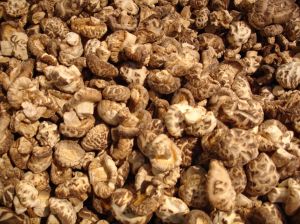
NOTE: If you cannot find fresh mushrooms, dried mushrooms are widely available, in the market or over from the Internet. Pre-soak until they are soft, then sliced. Also pre-soak the mung beans and lentils.

Peel the garlic cloves, crush them with flat side of knife.  Wait 10 minutes, and then mince them.

Add the garlic and all the remaining ingredients and cook at a slight boil for two hours, stirring occasionally. Season with reduced-sodium tamari (soy sauce). Try pureeing in a blender. Refrigerate surplus after eating.

Consume one cup of this soup per day, 3-4 times per week.  You may add any other fresh, organic vegetables.

~ Bon Apetit!

Laughter Yoga

It always amazes me how many things children can find to giggle or laugh about in a day.  What happens to our ability to laugh as we get older? My boyfriend's girls, 10 and 12, are constantly giggling at something. I seem to judge each thing on my internal laugh index before I deem it worthy of my laughter!  Sheesh! Don't get me wrong, I have a wicked sense of humor, and use it often.  Ask my relatives!  But when it comes to expressing hilarity at something someone else does or says ... her come da Judge! lol

I've made a promise to myself to laugh at every attempt someone makes to be funny. I get the benefit of the laughter, and they get the benefit of feeling good about making me laugh! Talk about a Win-Win.

Kataria is a physician from Mumbai, India, and is the founder of and chief proselytizer for Laughter Yoga. Based on his teachings over the past fifteen years 5,000 laughter clubs have sprung up worldwide. People meet just to laugh.

So far there are around 200 clubs in the United States, including ones in Atlanta; New York; Orlando, Florida; St. Louis; and Tucson, Arizona. Kataria hopes to change that over the next few years, by training more teachers.

“Our objective is to build an international community of people who believe in love and laughter,” Kataria says.

Near Pasadena, California about 20 people—yoga instructors and health care providers, and retirees—have gathered in a spacious 1910 Craftsman bungalow for this workshop. The five-day training includes sessions on the health benefits of laughter, starting and running a laughter club, and working with particular populations, such as children and the elderly. Most of the time is spent on what Kataria calls his “breakthrough technology”: exercises designed to get people to laugh for no reason.

Combining simple yoga breathing techniques and “laughter meditation” we get to the heart of Laughter Yoga. Kataria promises that Laughter Yoga relieves stress, boosts immunity, fights depression, and eventually makes people into more positive thinkers.

How Laughter Heals

Kataria says, “When you start laughing, your chemistry changes, your physiology changes, your chances to experience happiness are much greater. Laughter Yoga is nothing more than prepping the body and mind for happiness.”

According to Kataria laughter has two sources, one from the body, one from the mind. Adults tend to laugh from the mind. “We use judgments and evaluations about what’s funny and what isn’t,” he says. Children, who laugh much more frequently, laugh from the body. “They laugh all the time they’re playing. Laughter Yoga is based on cultivating your childlike playfulness. We all have a child inside us wanting to laugh, wanting to play.”

The idea that laughter has beneficial effects is not new. Norman Cousins, editor of the Saturday Review, documented his own laughter cure in the 1979 book 'Anatomy of an Illness as Perceived by the Patient'. Cousins was diagnosed in the mid-1960s with ankylosing spondylitis, a painful degenerative disease of the connective tissue that left him weak and barely able to move. Doctors gave him a 500-to-1 chance of recovery.

Instead of undergoing conventional treatments, Cousins checked out of the hospital and into a hotel, where he set up a film projector and played funny movies. He took massive doses of vitamin C and submitted himself to hours of the Marx Brothers. “I made the joyous discovery that ten minutes of genuine belly laughter had an anesthetic effect,” he wrote, “and would give me at least two hours of pain-free sleep.”

Cousins recovered and lived for another 26 years. And, in part inspired by his experience, a handful of scientists began researching the healing power of laughter. William Fry, then a psychiatrist at Stanford University, was one of those people.  Fry documented some of the health benefits of what he calls “mirthful laughter.” In a series of studies, Fry and his colleagues found that laughter increases circulation, stimulates the immune system, exercises the muscles, and even invigorates the brain. Other researchers have found that laughter reduces stress hormones and may even help prevent heart disease.

What about forced laughter?  Fry believes that aside from the mental stimulation that comes in the moment of discovery when you hear a good joke or appreciate a pun, the effects should be largely the same. “I think it’s definitely beneficial,” says Fry.

How do you laugh when nothing’s funny? Just open your mouth and force the breath out with your belly!  Trust me, it’s going to feel silly at first, but you know, if you get a bunch of people together and do this...you’ll all be genuinely laughing in no time! Try it with your kids, they’re experts at it.

Do you remember the scene in Mary Poppins when Uncle Albert is singing "I Love to Laugh"?  Well that should be your training video!

So let’s get started:

Lion laughter Stick out your tongue, widen your eyes, and stretch your hands out like claws and laugh.

Nasal laughter Laugh with your mouth closed and push the air out through your nose.

Silent laughter Open your mouth wide and laugh without making a sound. Look into another person’s eyes and make funny gestures.

Gradual laughter Start with a smile then slowly start laughing with a chuckle. Turn up the intensity of your laugh until you’ve achieved a belly laugh. Gradually bring your laughter back down to a smile.

Heart-to-heart laughter Hold hands with another person and laugh. If you feel comfortable together can touch or hug.

~Hilariously yours!