Hello Brussels. Why so Bitter?

The Case of the  Brussels Sprout

This is not the story of a boy from Brussels and how he wound up in Court....

This is the story of a Sprout accused of being bitter and unfriendly.  The first mention of this sprout is traced to the late 16th century. It is thought to be native to Belgium, specifically to a region near Brussels, after which it was named.

This Sprout is a member of the Brassica family and therefore related to Broccoli and Cabbage. Don't be fooled by its size however! Watch what you say because a Sprout grows up with a bunch of 20 to 40 other Sprouts, on the stem of a plant that grows as high as three feet tall!

These miniature-sized vegetables contain the largest content of anticancer phytochemical compounds such as glucosinolates. Like broccoli, the indole-3-carbinol has been found to reduce cancer growth especially for estrogen dependent cancers (e.g. uterine, breast, cervical).

brussel sprouts

In order to plead the case for this Sprout I lay before you the following:

Character Traits *

  • Brussels sprouts can help us avoid chronic, excessive inflammation

  • You'll find nearly 100 studies in PubMed (the health research database at the National Library of Medicine in Washington, D.C.) that are focused on Brussels sprouts, and over half of those studies involve the health benefits of this cruciferous vegetable in relationship to cancer

  • They provide us with this cholesterol-lowering benefit whether they are raw or cooked. When the cholesterol-lowering ability of steamed Brussels sprouts was compared with the cholesterol-lowering ability of the prescription drug cholestyramine, Brussels sprouts bound 27% as many bile acids

  • The fiber content of Brussels sprouts: 4 grams in every cup makes this cruciferous vegetable a natural choice for digestive system support.

  • The detox support provided by Brussels sprouts is extensive. There is evidence from human studies that enzyme systems in our cells required for detoxification of cancer-causing substances can be activated by compounds found in Brussels sprouts.

* HealthDiaries.com: 11 Health Benefits of Brussels Sprouts

It Takes Proper Cooking to Bring Out the Sprout's Goodness!

Perfectly cooked Brussels sprouts have a crisp, dense texture and a slightly sweet, bright, and "green" taste. Steaming the Sprouts increases their health benefit potency.

Steam them

Bring a scant 1/2 inch salted water to boil in a large frying pan or saute pan. Add Brussels sprouts, cover, and cook until sprouts are tender to the bite and water has evaporated, about 5-7 minutes (depending on how crisp you like them).

In a Steamer Basket:  Bring about an inch of water to a boil in the bottom of a pot into which your steamer basket or insert fits. Put cleaned Brussels sprouts in the steamer basket, set over the boiling water, cover, and steam until tender to the bite, about 5-7 minutes.

You can toss them with Olive or Coconut Oil, salt and pepper; garlic and lemon; or with Pasta Sauce!

Roast them
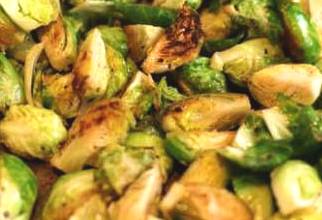
brussel-sprouts, roaste

  • 1 1/2 lbs. organic Brussels sprouts, ends trimmed and yellow leaves discarded

  • 2 Tbs. virgin Olive Oil

  • 1 tsp. Sea Salt

  • 1/2 tsp. freshly ground Black Pepper

  • 1 tsp. Paprika

  • 1/2 tsp. organic Garlic Powder or 2 cloves well mashed

  • 4 Tbs. lemon juice

Rinse Sprouts trim off ends and place in a large bowl. Blend the spices together with the oil and lemon. Pour this over the sprouts and toss until well coated.

Place in oven proof dish or cookie sheet lined with parchment, and roast at 400ºF for 35 minutes or until lightly golden.

Braise them

Braising, or slow cooking in liquid on the stove, is a great way to elicit Brussels sprouts' natural, nutty flavor.

The Problem With Diets

First watch this short video...

What Diet? 

whatever you are eating now means You are already on a diet. But What is it?

Is the food you eat every day supporting what your cells need to do their job of keeping you alive and healthy? OR are your food choices slowly and silently robbing your cells and organs of the very nutrition they need to function?

We think we’re ok on a diet that includes processed food, sugar, regular alcohol consumption, empty carb calories, fast food, etc… because we have no symptoms.
Symptoms will show up, give them time… the storm is already brewing, it just hasn’t come to shore yet. Ignoring this reality is why we are consistently caught by surprise when we are “suddenly” diagnosed with an imbalance or disease.

The deterioration of our immune system or physical functions happens slowly, over time. Don’t kid yourself, that you are fine just because you don’t ‘feel’ anything and the routine blood tests (which barely cover all the necessary information to asses the body’s health status) look pretty good.

You have only 2 choices… eating living, organic nutritious foods or not. If not, you cannot be surprised if 5 - 10 years down the road your doctor has bad news. Whether we want to experience a healthy life after 60, or take our chances to purely please our palate is really up to each of us.

Don’t go on a “DIET” for a few months thinking that will have any lasting effect, instead live a Lifestyle that supports wellness for the rest of your life.

What If? - Why Statistics Shouldn't Scare You!

One of the most routine pieces of information that the medical industry, for it is an industry, throws at us is a Statistic. Statistics are there to show you how likely you are to contract some disease, to have a boy or girl, to getting a divorce, or find a new job.  There seem to be so many studies that we now have a statistic for everything...including how many times you're likely to blink in a minute! How could we go on without that piece of data?

We have to be honest though; we like them. We quote them to others to deter them from some decision or action. If they favor us, we advertise them.

Statistical tables

Well, one thing I surely learned from taking Statistics in Grad School, is that if you manipulate data just right...you can come up with a number of statistics... and not all will agree.  In other words, much of data can be manipulated to show the statistic you are after.

And yet, without statistics we're loathe to trust information lest it merely be opinion.

Let's think about that for a minute.  I'm going to go out on a limb and ask... is there anything truly that is more than opinion?To be tagged a trusted statistic, the number must be based on factual data... that may or may not hold up in time.

How much time is long enough? 5 years worth of data? 20 years? Up until such time as new data is discovered?

Some of you are going to gasp in horror, shake your heads in dismay, and remind me about all the theories we accept as truth since they are based on scientific FACTS! You know the proven, repeatable, unbiased, honest-to-goodness, theories.

Bar Graph

Hmmm... can you think of something we believed to be true for decades that was later dis-proven?  I mean besides the Earth being flat, and that the Sun rotates around the Earth.

How about:

There are 109 Elements in the Period Table New information: Since 1994, six new elements have been discovered.

or:

The first mammals evolved about 155 million years ago. New information – “The shrew-like animal would have run under the feet of dinosaurs at the start of the Jurassic period, nearly 195 million years ago … Hadrocodium wui pushes back by another 40 million years its first appearance in the fossil record.”.

Here are a couple of sites just for fun...

1. Medical Facts that Have Been Proven to be Wrong

2. What Scientific Laws or theories have been proven wrong?

All this is to say that as we add new information to our data, our statistics or theories have to change.  With me so far?

Ok, here's the "WHAT IF"...

Let's go back to the Medical Industry... that slow to move, slow to assimilate new information, give me 3 - 10 years of similar data before I can make a decision, industry.

  1. Medical statistics in the West are based on Western Medicine's view of valid data.  Yes?

  2. In the U.S. and even more so abroad, many, many people incorporate "alternate"  methods into their every day or healing regimen. Yes?

  3. When a patient visits a traditional medical practitioner, their condition is assessed from a "symptom" and "data I learned about that symptom" perspective. Yes?

  4. A patient is hardly ever asked what their eating habits, supplementation, attitudes and belief's are as part of the standard, one size fits all data sheet they fill out.  Yes?

  5. A diagnosis is based on those symptoms (I am trying to distinguish these from causes of illness) and on scientific data, clinical that is.  Yes?

  6. You are then given a statistic if relevant to your situation, and with Cancer patients, boy are we happy to quote statistics.  Yes?

  7. You leave programmed with the belief that you will fall in one of those statistical groups, and left to wonder which it will be... because you really have no control over that...it will depend on how your 'disease' responds to treatment. Yes?

Here's my belief and something you should think about seriously

To make things simple I'm going to choose two people to illustrate my theory. We're going to name them B and K.

B and K have recently had mammograms that show a small mass in one of their breasts. B and K are informed they should have biopsies.

B is conservative, has not done a lot of thinking about health trends or a lot of research about cancer treatment approaches.  She is a believer in Traditional medicine and trusts that her Oncologist has all the answers.

B opts for a needle biopsy, since she is assured they are safe.

K is progressive, she is a hiker, has acupuncture for benign symptoms and  is very interested in nutrition and Eastern medicine. She immediately scours the Internet for the latest news in Breast Cancer research.

B doesn't want a needle biopsy.  She can't believe it's 100% safe, since in her mind there is no way that pulling a needle filled with cancer cells isn't going to leave a few of those microscopic cells along the needle path. She opts for a lumpectomy.

They have the same type of cancer, and their Oncologist suggests the traditional Chemo drugs for that type, followed by a course of radiation. The statistics are shared with each of them... since they were both caught early there is a 78% chance that nothing will develop, and a 22% chance of recurrence. Chemo adds another 5-6% benefit.

For our example, they both choose to have Chemo.

They both meet with the resident Nutritionist who tells them about foods and supplements to avoid during treatment, and how to modify their diet for cancer prevention.  He gives each a handout about Chemo side effects and some suggestions to alleviate them (most are drugs to take).

K leaves feeling down, a little overwhelmed by the information and the changes she has to make.  Her husband is supportive and upbeat, and her sister is distressed, a little worried about her own fate now. K's home is comfortable, clean and in a suburban neighborhood. K has two children, 14 and 16, and a small dog. Her brother has left her a message on her answering machine encouraging her to talk to a Doctor he trusts before making a decision.

B leaves feeling anxious to get home so she can initiate a search for a Complimentary Therapy practice.  Her boyfriend sends a few emails to solicit info from friends.  They live in a two-story condo and have custody of his 12-year-old son. The house is a little messy, but furnished tastefully.  Flowers stand in a vase in the living room, and a parakeet in a large cage near the patio door. Two of B's friends are waiting for her when she arrives...each has brought a gift from the Farmer's market.  They cook lunch together while she tells them what her approach is going to be.

K and B go through the same treatment cycle.

I m not sure...

K

takes the suggested meds for side effects.  Eats well and tries to be positive. Her husband goes to most of the sessions with her, alternating with her concerned sister.  K suffers from fatigue, has a rather emotional reaction to her hair loss, and is cautiously optimistic.  She walks for 20 minutes most days and tries to act brave in front of her sister so as not to worry her.  Her kids are taking things well and help around the house.

No one suggests she have alternate types of care during the course of her treatment. She's not sure she trusts acupuncture, when a friend mentions it.

B

finds and consults with a Nutritional Oncologist. She immediately starts on a long list of supplements each specifically targeted to either support her immune system, help the Chemo be more effective by unmasking cancer cells, or counteract the side effects. She continues acupuncture to move the toxins out as quickly as possible and alleviate nausea, and joins her two friends in a Yoga class twice a week.

Her boyfriend sets up a rotating meal prep schedule with some of their friends, so that for the 4 days after Chemo they don't have to worry about cooking.  They give each cook an approved ingredient list. He makes sure B has plenty of uplifting books to read, is ready with an amusing story when he gets home, and the three watch funny movies after dinner and homework are done.

Pretty woman

B meditates, is determined to move through this process and into a healthier body, and goes out with the girls to shop for a crazy wig when her hair falls out.

Outcomes

A year and a half later, K has a recurrence almost in the exact same spot as her previous tumor. She opts for a mastectomy and new course of treatment. She mostly sticks with her diet, and takes a few standard vitamins.

B on the other hand, is an active volunteer in the Cancer Wellness Community 3 days a week after work. She has completely changed her lifestyle and eating habits and continues with a maintenance Supplement regimen per her Nutritional Oncologist.  Her friends, inspired by her, have cut out some of the bad foods they used to indulge in. She has one more scan in 6 months and will proclaimed Cancer-Free.

And What do the Statistics Say?

K and B's Oncologist, ignorant of all the ingredients that went into each woman's healing process, chalks one person up as benefiting from the XYZ Chemo combination, and one woman needing a second round with XQW treatment, and per statistics not as good a prediction for long-term cancer-free survival.

Where are the Stats that take into account the needle biopsies vs. lumpectomy?

Where are the Stats that traces eating habits and the effect of well-studied supplementation?

And where are the Stats that show how one's attitude and faith skew the odds in one's favor?

Where are so many of the potentially high-impacting variables accounted for in the Medical Industry data?

No where.

And so from my heart I say:

  1. You are not a Statistic.

  2. You are in charge of your healing process.

  3. Educate yourself and be open-minded.

  4. Surround yourself with happy, positive people.

  5. Don't mess with the recommended Cancer Diet, it's Medicine!

  6. Cultivate an unshakeable faith in your ability to heal

  7. You are NOT your illness... it is passing.

  8. Laugh, laugh, laugh... It really IS the Best Medicine!

~ Be Well. ♥

Guaranteed to Raise Your Antioxidant Level

It is rare to find a company that has enough research behind their product that they can offer a money-back guarantee if it does not perform. Depending on the supplement you are taking, it's not always an easy task to discover if you're getting the full benefit from what you're taking.  With Vitamins like D, you can do a blood test, but when your goal is to raise your antioxidant levels, testing how well  you're doing can be costly.

What Depletes Antioxidants Stored in our Body?

Many things contribute to the depletion of antioxidants in our bodies...stress, smoking, lack of good digestion, too much exercise, infection, etc.

Vitamin C fights free radicals in body tissues and blood plasma, while vitamin E protects fat-rich molecules, such as LDL and HDL cholesterol, and fat cells from oxidation. This effort to protect the body results in the depletion of vitamin C and E in body stores.

Our bodies store antioxidants for use when we need them.  If we are not storing enough, we are less likely able to fight off inflammatory diseases like diabetes, heart disease and cancer. Eating a balanced diet with 5 to 10 servings of fruits and vegetables every dayto obtain maximum levels of dietary antioxidants is recommended, but not always achievable.

To boost your vitamin E levels, include whole grains, nuts and seeds, egg yolks and vitamin E- fortified foods in your diet. Consult your doctor about vitamin supplementation.

Choosing an Antioxidant Supplement

Choosing an antioxidant supplement — You want to make sure the manufacturer uses pure ingredients from a trusted source, organic when possible, has both their own and third-party research behind the formulas, and is reputable.

There are a handful of companies that meet these criteria, but only one I know of that also offers a money back guarantee.

Lifepak Nano is a proprietary innovation in anti-aging protection with advanced bio-availability and maximum benefits. It is manufactured by NuSkin / Pharmanex, one of the leading anti-aging research companies.

Lifepak Nano is their star supplement, which exhibits rather exceptional results. If you are considering a comprehensive Vitamin/Mineral/Flavonoid supplement, consider this product.

  • Specific purpose to guard against the ravages of aging each day of your lifespan*

  • Superior bio-availability with CR-6 LipoNutrients™ enhances uptake from the gut into the bloodstream and body for maximum anti-aging benefits*

  • Advanced anti-aging formula helps protect the body with key nutrients such as NanoCoQ10™ and nano carotenoids*

  • Helps maintain normal inflammatory responses in the body*

  • Feeds and helps protect the brain with DHA and EPA*

  • Offers superior DNA protection against damaging free radical attacks by providing the body with important antioxidants and phytonutrients such as alpha-lipoic acid and catechins*

  • Protects cell health with an antioxidant defense network*

  • Helps protect cardiovascular health with a comprehensive blend of omega-3 fatty acids and other nutrients

  • Provides comprehensive bone nutrition support*

  • Promotes healthy immune function*

  • Supports normal blood sugar metabolism*

  • Corrects nutritional deficiencies*

~ Be Well! ♥

Authentic Arabic Bread - Basic Dough

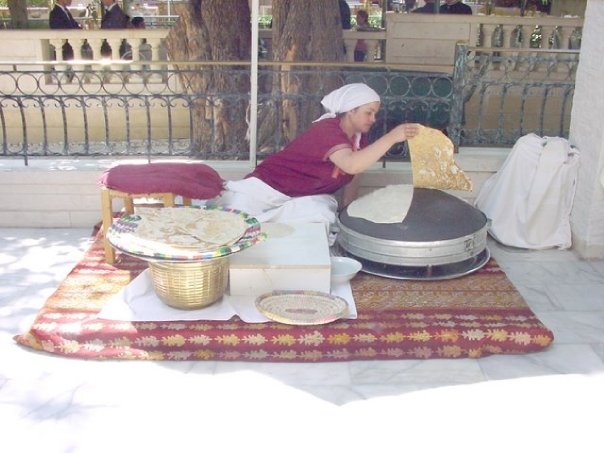
Whenever we make dough for Zaatar pies, we save some to make Arabic (pita) bread. This is a Basic Dough recipe which is used to make Spinach, Meat and other hand-shaped small pies, as well as bread.  The dough is rolled thinner than for pita rounds, and is folded and sealed around a variety of fillings. This bread is present at almost every Lebanese meal. Another variety of Arabic bread that I love is rolled paper-thin and cooked on the top of a domed outdoor oven.  It is called 'marqooq', and is like lavash but much thinner. It can be found at Middle Eastern or Persian markets.

saaj oven

It's ideal for rolled sandwiches and making pin wheel appetizers, but since the dough is thin you need to use fillings that are not very wet, so the bread doesn't become soggy.

Making saaj bread

Traditionally, Arabic bread loaves are 10-11" round, but you can make them smaller, like the popular store-bought pita.

I use my larger Cuisinart to mix the dough, and then knead it 5 minutes by hand, or sometimes I let my KitchenAid mixer do all the work.  I leave that up to you.

Depending on the size of rounds you decide to make, this recipe will yield anywhere from 12 - 16 loaves.

Recipe

  • 4 c. organic all-purpose Flour

  • 2 c. organic Barley Flour

  • 1 1/2 tsp. Sea Salt

  • 2 packets (4 tsp.) dry Yeast

  • 1/2 tsp. organic Evaporated Cane Sugar

  • 2  to 2-1/4 c. tepid Water

  • 3 Tbs. Extra Virgin Olive Oil

Sift flour and salt. Dissolve yeast and sugar in water, and proof for 5 minutes.

Fit mixer with dough hook, or Cuisinart with dough paddle. Put flour in mixer bowl and add water and yeast mixture. Process until smooth.

Remove dough and place on floured board.  Knead for 5 minutes.  Dough should be soft but not very sticky.  Add a little more flour or water depending on consistency.

Place dough in a greased bowl, cover with damp cloth and let rise until doubled, about 1-1/2 hours.

Divide dough into 4 equal portions, and divide each of those into 3 -4 balls depending on size preference. Cover balls with towel and let rest another 15 minutes.

Heat oven to 425º F, turn a cookie sheet upside down and place it on the middle rack of the oven while you are preheating the oven.  You will bake the bread on this surface (if you have a pizza stone then you can use that instead.)

Dust your work surface with a light coating of flour.  Slightly flatten one of the balls of dough with your hands and sprinkle a bit of flour on top.

rolling_pin_and_dough

Roll the dough out to between 1/8 and 1/4 " thick. If the dough does not stretch easily cover it with the damp towel and let it rest 5 to 10 minutes before trying again.

Repeat with rest of dough.

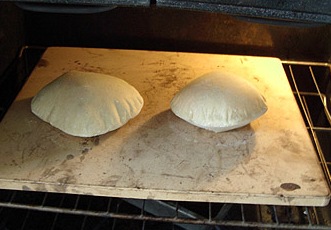
Place as many pitas as you can fit on the hot baking sheet surface. They should be baked through and puffy after 3-4 minutes.

pitabake2

Remove onto cooling rack with dough paddle, or large spatula.

Store bread in airtight bag. Will keep for 2 days at room temperature, or in refrigerator for 5-6 days.

~ Sahtein! (double health). ♥

Green Bean, Carrot and Red Pepper Salad

I'm not usually a fan of red peppers, but in some recipes, like this one, I love the flavor they bring to the dish. This salad is best served at room temperature, but can also be chilled.

You'll need:

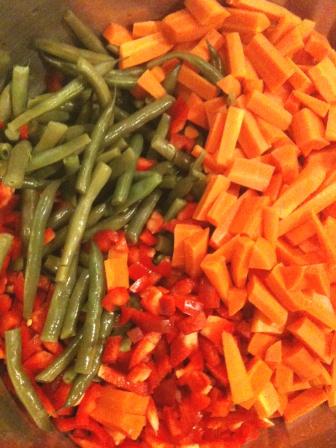
  • 1 lb. organic Green Beans, trimmed and cut in half

  • 1 lb. organic Carrots, sliced in 1-inch pieces or julienne

  • 1/2 organic Red Pepper, diced

  • 1/2 organic Red Onion, diced

Dressing

  • 2 Tbs. Virgin Olive Oil

  • 1 Tbs. Red Wine Vinegar

  • 1 tsp. Stevia or raw local organic Honey

  • 2 tsp. organic Tomato Paste

  • Sea Salt and Black Pepper to taste

Steam green beans and carrots until crisp-tender, about 15 minutes.

Drain and place in a large bowl. Add peppers and onion.

Mix dressing with a fork until blended. Pour over vegetables and mix well.

Serve at room temperature for maximum flavor.

~ Bon Apetit! ♥

My Marvelous Meatball Soup

We may have seen the last of the cool weather in Northern California, so I wanted to close the season with one more gathering around soup bowls. In the valley where we live, summer temps can reach 102ºC...HOT.  Today it was in the high 80's, still tolerable, but around 3pm I had to get the a/c going.

I realized that it has been forever since I made Mom's meatball soup. Rolling the tiny meatballs was an activity I liked participating in. Mom taught me how to roll two at a time, since we'd make about 150 of them sitting on the pink vinyl couch in our spacious kitchen, with a low table in front of us.

There was al,ways something going on in the kitchen. We had two live-ins since our house was a two-story with 6 bedrooms, 6 bathrooms, 3 living rooms, a formal dining room a laundry room and kitchen.  (Makes me pant to think about it).

My 4 aunts and uncle lived just 4 miles away and dropped by often.

So deciding to make this soup today was a trip down memory lane.  I seem to be doing that often these days.

You will need:

  • 1 1/2 lbs ground lean Grass-fed Beef (or Lamb)

  • 2 tsp. Wheat germ or Oat Bran

  • 1/2 c. organic Parsley, chopped fine

  • 1 tsp. cinnamon

  • 2 tsp. Sea Salt

  • 1 tsp. black pepper

  • 1 c. chopped organic Tomatoes

  • 1/2 c. Tomato sauce

  • 1/2 c. chopped organic Onion

  • 1 organic Carrot, shredded

  • 1 large organic Carrot, sliced into thin rounds

  • 1/3 c. Brown Rice

  • 2 Tbs. Parsley, chopped (as topping)

Mix meat, seasoning, wheat germ, parsley, onion and shredded carrot well.

meatball soup1

Form into tiny meatballs, a little larger than a hazelnut.

meatball soup2

Heat 6 cups of water in a large pot, and drop meatballs in a few at a time.

meatball soup4

As it starts to boil, turn down heat and skim surface until clear.

meatball soup5

Add tomato sauce, rice and round carrots, cover, and cook until rice is done, about 35 minutes, depending on rice you use.

Season with salt and pepper and a generous dash of cinnamon.

meatball soup6

Cook 5 minutes longer, and add some chopped parsley.

Enjoy with a side salad and roasted sweet potatoes.

~ Sahtein (double health!) ♥

Make room for Mushrooms.. It's What's for Dinner

Chanterelle Mushroom – Chicken Pie

Adapted from Tom's recipe at www.tallcloverfarm.com

For the vegetarian version, omit the chicken and add three pounds of mushrooms.  This is a great vegetarian pie as chanterelles are meaty little guys with rich texture.

You will need:

  • Two Pie Crusts: Your favorite Whole Wheat,  Spelt (Whole Foods has a wonderful frozen Spelt crust), or Gluten Free crust of your choice
  • 1.5 lb Chanterelle mushrooms
  • 3 T. Virgin Olive oil
  • 1.5 lb organic, free-range Chicken
  • 1 T. whole wheat Flour
  • 1 Lemon, juiced
  • 1 large Onion, chopped
  • 1 c. Soy Yogurt (Sour Cream if you can eat dairy)
  1. Sauté mushrooms in oil, until tender and most liquid evaporates
  2. Add onion, sauté until translucent
  3. Add diced chicken to pan, cook until tender
  4. Add flour, stir, cook for a few more minutes for thickening
  5. Add lemon juice and yogurt and stir. Let cool to room temperature

Preheat oven to 425 F. Place baking sheet in oven.

Line crust in 9-inch pie plate (10-inch works, too).

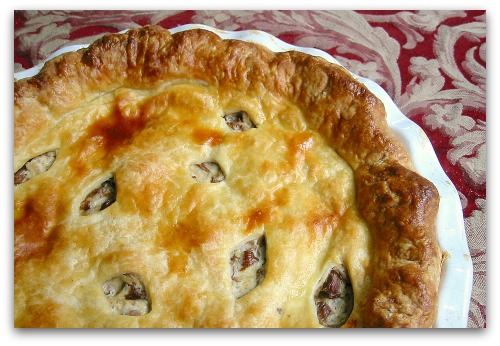
Add cooled filling to crust. Place second crust on top and crimp edges. Vent top crust by making 5 – 6 cuts with a knife.

Brush top crust with egg wash (one egg, 1 t. water, mixed).

Place pie on baking sheet in oven, on the middle rack. Bake for 15 minutes, or until top crust begins to brown.

Lower temperature to 350º F, continue baking for another 30 – 35 minutes, until golden and center is firm.

Serve warm (reheats well).

chanterelle mushroom pie Slicin Up Some Chanterelle Mushroom Piephoto credit: http://www.tallcloverfarm.com
Serve with a green salad and roasted balsamic asparagus!

 ~ Bon Apetit!

Oatmeal Cranberry Cookie

oatmeal cran cookie

Oatmeal Cranberry Cookie

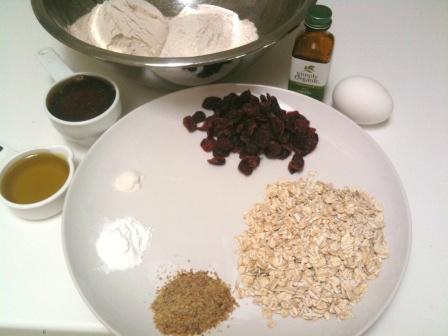
  • 1/2 c. Oat flour

  • 1/2 c. Barley Flour

  • 1/2 tsp. Psyllium Husk Powder

  • 1 tsp. Baking Powder

  • 1 Tbs. freshly ground Golden Flax Seeds

  • 1/4 c. Virgin Olive Oil

  • 1/2 c. Barley Malt Syrup *

  • 1 large Pasture-Raised Egg

  • 1 tsp. pure Vanilla Extract

  • Generous 1/2 c. organic Rolled Oats (not quick-cooking)

  • 1/2 c. dried Currants, Cranberries or Blueberries

Preheat oven to 350º F (175C).

oatmeal cran cookie

In a medium bowl, whisk together flours, Psyllium and baking powder; set aside.

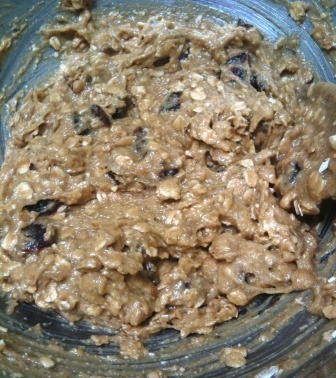
In a large bowl, whisk together oil, syrup, egg, and vanilla. Add to flour mixture, and stir to combine. Mix in oats and currants.

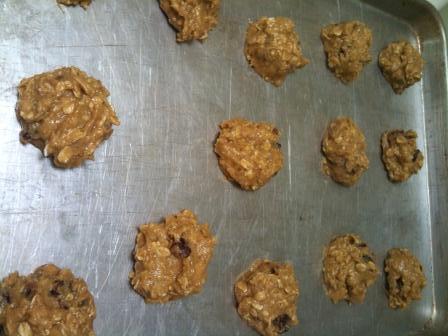
Using 2 tablespoons of dough per cookie, roll into balls or drop onto baking sheet lined with parchment (or lightly coated with Coconut Oil), about 1-1/2 inches apart.

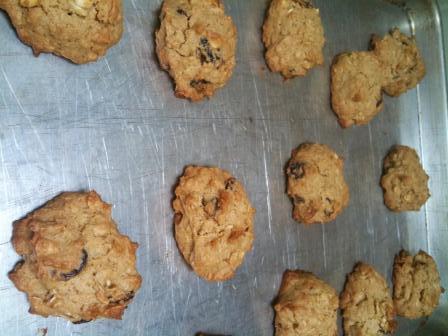
Bake until lightly browned, 15 to 17 minutes, rotating sheets halfway through.

Cool 5 minutes on sheets, then transfer cookies to a wire rack to cool completely. Store in an airtight container at room temperature, up to 3 days or refrigerate.

* Barley malt syrup is considered to be one of the healthiest sweeteners in the natural food industry. Made from soaked and sprouted barley, which is dried and cooked down to make a thick syrup, barley malt is a sweetener that’s slowly digested and gentler on blood sugar levels than other sweeteners.

~ Enjoy! ♥

Cheesey Stuffed Mushrooms - Non Dairy

Tomorrow evening I am having a few people over to test their anti-oxidant levels with the amazing machine I spoke of in my post on April 27th. I'm so excited to have access to such a wonderful tool.  My teenage son agreed that most kids in his class would rate quite poorly, and he's anxious to see what his results will be. To supplement his diet, I started him on the Teen vitamins Pharmanex makes, and so in 4 weeks we'll do another reading to see if his levels rise. (It takes about 4 weeks for the change in your anti-oxidant levels to reach the skin, which is what the Biophotonic Scanner is measuring.)

I am going to try to get as many doctors in our area to incorporate this piece of data into their health evaluations!

Anyway, I want to make a little treat to serve tomorrow night and thought these quick and simple to put together appetizers would be fun.  (If you are someone who can eat dairy, then substitute goat cheese for the rice cheese.)

Makes about 24

mushrooms

  • Olive oil, for baking sheet

  • 3 slices whole wheat Sandwich Bread

  • 1 small Garlic clove, coarsely chopped

  • 6 oz grated Rice or Almond Cheese

  • 1/2 c. fresh organic Parsley leaves, chopped

  • 1/4 tsp. Red Pepper flakes

  • 1/4 tsp. Black Pepper

  • Coarse Sea salt

  • 2 packages (10 ounces ea) white button mushrooms, stems removed

Preheat oven to 400 degrees. Lightly oil a rimmed baking sheet.

In a food processor, pulse bread and garlic until fine crumbs form; set 1/2 cup aside. To food processor, add cheese, parsley, and red-pepper flakes. Season with salt, and pepper and pulse filling until combined.

Spoon filling into each mushroom, and roll filled side in reserved breadcrumbs. Place on prepared baking sheet; bake until mushrooms are tender and lightly browned, 15 to 20 minutes.

mushroom stuffed

Cheers! ♥

Rigatoni and Veggies

Dinner in a Flash

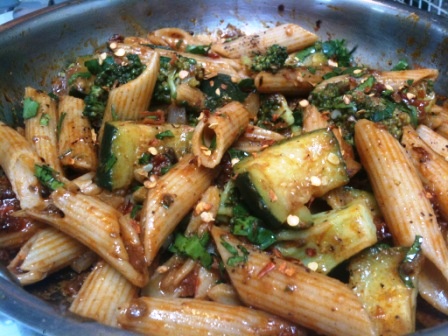
I had some left over Pasta noodles, zucchini and broccoli. I decided to toss them all together with a spicy sauce rich in antioxidants... due to the Garlic and Tomatoes (Lycopenes)... for a healthy and quick dinner.

Use any combination of veggies you have on hand.

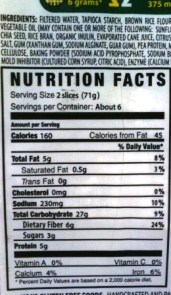
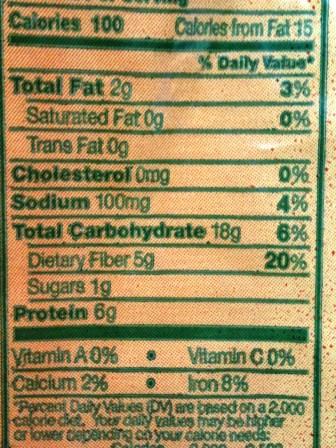
  • 2 c. whole wheat Rigatoni, cooked per directions (I use Fiber Gourmet brand, or Al Dente Carba) Substitute Brown Rice pasta for Wheat-Free version.
  • 1/2. sun-dried Tomatoes in oil, chopped up in blender
  • 1/4 c. hot Water
  • 1/2 c. each lightly steamed Zucchini and Broccoli, bite size pieces
  • 2 cloves organic Garlic, minced
  • 1/4 tsp. Sea Salt
  • 1/4 tsp. Black Pepper
  • 1/4 tsp. Oregano
  • 1/4 tsp. Red Chili Flakes (opt.)
  • 1/4 c. organic flat leaf Parsley, chopped

Place pasta, tomatoes and water in a pan over medium heat. Stir.

Add veggies, garlic and spices. Cover and simmer over low heat until warm...about 10 minutes.  Add parsley.

Serve with a small slice of Whole Grain bread (Udi't Millet or TJ's Flaxseed) sprinkled with virgin Olive Oil and organic Garlic Powder.

The two Breads mentioned above meet our Formula for 'Healthy Carbs'.   ~ Buon Apetito!

Lentil Soup with Chard

Shawrabit Adas bi Hamud  = literally, Lentil Soup with Lemon

This is the traditional Lebanese name for this soup, which is a popular winter meal in the mountain villages.

It's fragrant and hearty, and sure to warm you from the inside out.  The following recipe is based on my Mom's version, adjusted to lower the fat content! :)

 Lebanese Lentil Soup with Chard

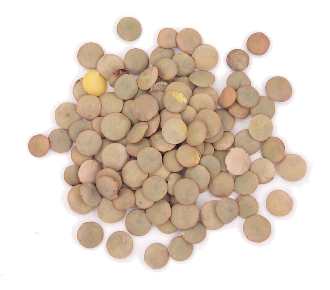
  • 1½ c. organic Brown Lentils
  • 2 c. hot Water or brewed Green Tea
  • ½ tsp. Sea Salt
  • 2 c. organic Swiss Chard, sliced into thin strips
  • ¼ tsp. Sea Salt
  • ¼ c. organic Cilantro, chopped
  • 2 Garlic cloves
  • 2 Tbs. Avocado Oil
  • 1 c. Yellow Onion, diced
  • 2 Tbs. organic Lemon Juice

Rinse chard and slice, discarding lower half of stem.

Place sorted lentils in a pot and cover with water.  Add the 1/2 tsp. salt, cover and bring to a boil. Reduce heat to med-low and simmer for 20 minutes.

Mash cilantro, garlic and 1/4 tsp. salt in mortar and pestle until a smooth paste.

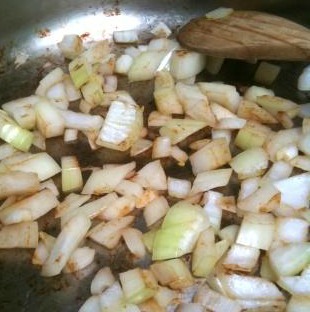
Place oil in saute pan over medium heat for 1 minute. Add onions and saute until translucent. Add cilantro-garlic paste and Swiss Chard. Stir until wilted. Remove from heat.

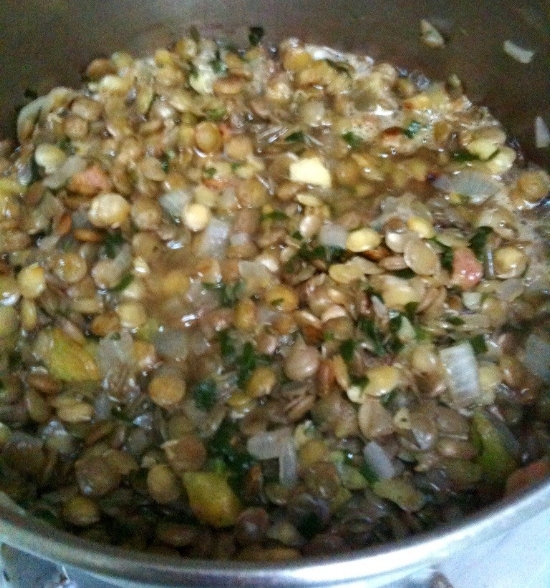
When lentils are tender, add the Chard mixture and the lemon juice. Bring to a boil, then reduce heat and cook, covered, for 10 minutes.lentils_Indian style

Adjust seasoning to taste. Allow to cool for 20 minutes.

Serve warm with toasted whole wheat pita bread or whole grain toast.

~ Sahtein!


Are You a Bean? or ... the Lentil Love Affair

Da Facts

The lentil (Lens ensculenta) is a legume that grows in pods containing one or two lentil seeds.  They are believed to have originated in central Asia.

Lentils have been eaten by humans since Neolithic times and were one of the first domesticated crops.  In the Middle East, lentil seeds have been found dating back more than 8000 years.

In the Old Testament, Esau gives up his birthright to Jacob in exchange for a bowl of lentil soup. The Greek playwright Aristophanes called lentil soup the "sweetest of delicacies." Lentils have been found in Egyptian tombs dating as far back as 2400 BC.

In India, the lentil is known as dal or daal. For many centuries, lentils were considered to be "the poor man's meat." In Catholic countries, those who couldn't afford fish would eat lentils during Lent instead.

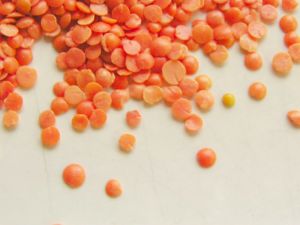
There are many varieties and colors of lentils, including brown, yellow, black, orange, red and green.  Beluga lentils are black and one of the smallest varieties of lentils, having an appearance similar to caviar.

French green lentils are small, delicate, and flavorful and hold their shape after cooking better than many other types of lentil. The most common lentils used in the United States are green and brown, since these varieties are best at retaining their shape after cooking.

The optical lens is named after the Latin word for lentil, lens. Unlike most other beans, lentils don't need to be soaked before cooking.

More Facts

With about 30% of their calories from protein, lentils have the third-highest level of protein, by weight, of any legume or nut, after soybeans and hemp. Proteins include the essential amino acids isoleucine and lysine , and lentils are an essential source of inexpensive protein in many parts of the world which have large vegetarian populations.

Lentils are deficient in two essential amino acids, methionine and cysteine. However, sprouted lentils contain sufficient levels of all essential amino acids, including methionine and cysteine.

Lentils also contain dietary fiber, folate, vitamin B1, and minerals. Red (or pink) lentils contain a lower concentration of fiber than green lentils (11% rather than 31%). Health magazine has selected lentils as one of the five healthiest foods. Lentils are often mixed with grains, such as rice, which results in a complete protein dish.

   References:

Randy Sell. "Lentil". North Dakota State University Department of Agricultural Economics. Archived from the original on 2009-06-21. Retrieved 2011-12-14.

Raymond, Joan (March 2006). "World's Healthiest Foods: Lentils (India)". Health Magazine.

Da Story

As a child and up to now, lentils have been one of my favorite beany legumes! There are two traditional Lebanese lentil dishes that Mom made quite often, and that I devoured... 1) Mjaddara : a lentil and rice mash that is better than chocolate fudge; and 2) Shawrabit Adas: 'Lentil Soup' with Swiss Chard and Cumin.

Both dishes were on the Top of my Comfort Foods list.  On wintry days when I visited my Uncle Yusef's house where Tehta (Grandma) lived, we'd huddle around their kerosene stove in the 'winter room', sitting on long cushions that bordered the wall, and eat bowls of Mjaddara with pita bread, pickles and shredded cabbage salad. My 3 cousins and I would listen to the adult conversations, poking fun at whoever was featured in each story, or play silly word games.

Lentils are versatile.  You can add them to salads, to chilies, and soups.

Click on the Recipe Names to go to the recipes.

~ Sahtein!

Lentil n Rice Mash aka Mjaddara

Mjaddara - Background

I make this dish when I want to travel back to my youth, to the days when someone else took care of me and cooked my favorite dishes, to a time when summers were spent at cousin's houses...walking downtown among colorful shops and busy streets... with multi-flavor ice cream cones in hand, and a string of relatives in tow.

Mjaddara tops my list of comfort foods. The warm, creamy texture and goodness of the lentils are incomparable. In Lebanon this is considered a peasant dish...I think it is King among lentil dishes!


Mjaddara

  • 1/2 c. organic Brown Rice
  • 2 c. organic Brown Lentils
  • 1/4 c. virgin Olive Oil
  • 2 large organic Yellow Onions, finely chopped
  • 2 tsp. Salt (or a little more to taste)
  • 2 c. hot water

Rinse rice and soak in water for 1 hour.

Pick through lentils, rinse bring to a boil. Cover and simmer for 15 minutes.onion saute

In the meantime, sauté onions in oil over medium heat until just golden.  Add the 2 c. hot water and boil 5 minutes over low heat.

Add to the cooking lentils along with the rice and salt.  Continue to cook over medium-low heat for 5 minutes, stirring occasionally with wood spoon.

Turn to low, cover and continue cooking for 15-20 minutes or until rice is done, stirring frequently to keep from sticking to bottom of pot. Consistency should be like a thick pudding.

Remove from heat and let cool for 15 minutes.  Then place 1 cups of the lentil mash in food processor and pulse 4 -5 times until mostly blended.  Return to pot and stir into remaining lentils.  (If you like your lentils whole, you may skip this step.)

Scoop Mjaddara into large bowl, or several smaller bowls. May be served hot (on cold days) or cold, accompanied by a green salad, pickles, radishes and fresh sweet onions.

Note: Traditionally this dish is eaten with pieces of pita bread folded into cones to form a scoop, then topped with a slice of onion, tomato or pickle!

mjaddara

~ To Your Health!

The Overlooked, Misunderstood Dandelion

Once upon a time there was a tall, slender green plant called a Dandelion.  Its name came from 'Dent-de-lion' which means lion's tooth in French.  This is due to its jagged edged leaves. Unfortunately, when you say 'Dandelion' many people think of the tiny yellow flowers and the stemmed puffs of white wispy hairs that crop up in their lawns, disturbing the otherwise monotonous green blanket of grass.  It is treated like an unwelcome visitor, annoying and over-staying its welcome.

dandelion2

Aaah, if they only knew who this disguised visitor really was, not only would they welcome it, they would shove the grass over to make permanent space for it!

As David Beaulieu said; "The war on lawn weeds in general -- not just dandelions -- is based on the notion that "the lawn is meant to showcase the diligence of the person who owns it. According to this view, lawns should be uniformly composed of grass, with no "intruders" permitted.

But others would argue that dandelions bear rather attractive flowers, whose yellow hue complements a green lawn nicely. "While the flower isn't bad," perhaps you object, "the seed head that succeeds it is unsightly." Even so, there are easy ways to minimize the impact of dandelions on the lawn, as long as you're willing to show some tolerance toward their presence. One way is to pluck the flowers as they appear. Another is to eat your weed problems away! "

Unveiling the Dandelion

The Dandelion, Taraxacum officinale, which means the "Official Remedy for Disorders", is so well-respected, in fact, that it appears in the U.S. National Formulatory, and in the Pharmacopeias of Hungary, Poland, Switzerland, and the Soviet Union. It is one of the top 6 herbs in the Chinese herbal medicine chest.

According to the USDA Bulletin #8, "Composition of Foods" (Haytowitz and Matthews 1984), dandelions rank in the top 4 green vegetables in overall nutritional value. According to data, dandelions are nature's richest green vegetable source of beta-carotene, from which Vitamin A is created, and the third richest source of Vitamin A of all foods, after cod-liver oil and beef liver! They also are particularly rich in fiber, potassium, iron, calcium, magnesium, phosphorus and the B vitamins, thiamine and riboflavin, and are a good source of protein.

This perennial has been known since ancient times for its curative properties and has been used for the treatment of various ailments such as infections,bile and liver problems, some cancers, dyspepsia, heartburn, spleen and liver complaints, hepatitis and anorexia. However, its use has mainly been based on empirical findings. There is evidence to suggest it may have anti-inflammatory effects and assist with urinary tract infections in women. 

Note: Due to its high potassium level, dandelion may increase the risk of hyperkalemia when taken with potassium-sparing diuretics.

The Plea

Now will you let it hang out in your yard?  Ok then, here's yet another reason...It's DELICIOUS!!

Sautéed with garlic, cilantro and lemon it beats Spinach in flavor...and  used in salads it adds a nice slightly bitter 'edge', much like escarole.

The following is my favorite Dandelion Greens Salad...it's quick and simple to prepare.'

red onion chopped

Hoda's Simple Dandelion Salad

  • 4 cups chopped organic Dandelion leaves

  • 1/2 Red Onion, chopped fine

  • 2 Tbs. Lemon Juice

  • 2 Tbs. virgin Olive Oil

  • 1/4 tsp. salt

  • 1/4 tsp. cumin (opt)

Combine all in a deep bowl, toss well and serve.

dandelion salad

~ Compliments whole grain, lentil and bean dishes. Also good with roasted chicken. ♥

Savoy Cabbage Comfort Food

The creamy texture of steamed/boiled cabbage is very comforting to me. The subtle flavor that is melts into your mouth is an invitation to experiment with fillings, spices and herbs. Mom used to make the best stuffed cabbage and cabbage stew recipes ever!  No, I'm not biased...after all she published a 500-page cookbook at the behest of friends for a reason. :)

She created a 'whole stuffed cabbage' dish that made us swoon, and that I will share here at a later date. The following recipe is based on one of hers too, with a little tweak to lower the fat content. (She used clarified butter in much of her creations.)

If you venture to try this, please let me know how you liked it!

Minted Cabbage with Garbanzo Beans

  • 1 Tbs. Coconut Oil or Virgin Olive Oil
  • 1/2 Savoy cabbage, chopped into bite size chunks
  • 1/4 c. organic Onion, chopped
  • 3 med. cloves Garlic, minced
  • 1/4 c. organic fresh Mint, minced
  • 1 c. hot Water
  • 2 tsp. Lemon juice
  • 1/4 tsp. Allspice
  • 1 tsp. Sea Salt (to taste)
  • 1/2 c. organic Garbanzo beans

Combine garlic and mint in a bowl and press down with back of wooden spoon to blend together.

Place a deep pot over medium heat.  Wait 1 minute and add coconut oil.  Wait another minute and toss in garlic/mint.  After 2 minutes, add cabbage chunks. Stir occasionally until cabbage starts to wilt.

Pour the hot water over the cabbage, cover and let simmer over med-low heat for 15 minutes.

Add lemon, allspice, salt and garbanzo beans, stir and simmer for an additional 15 minutes.

Serve over brown Basmati and wild rice, or whole wheat Bulgur Pilaf.  Can add more fresh mint as garnish.

~ Bon Apetit!

Decadent Dairy-Free Mousse - Vegan + Sugar Free

Minted Chocolate Tofu Mousse

I love the combination of mint and chocolate.  If you don't, you can substitute orange zest or Rum extract for the mint.

  • 10 oz. (1-1/4 c.) organic Silken Tofu

  • 1 c.  Dark Chocolate, in pieces (I used 75% dark)

  • 1/4 c. organic raw Cocoa powder

  • 1/4 c. Green tea or Water

  • 1 Tbs. Almond extract

  • 1/2 c. Birch Xylitol or 4-5 packets Stevia

  • 1/4 c. fresh organic Mint leaves, chopped  ( or 1 tsp. dry mint)

Place chocolate, cocoa, water, extract and sweetener in pot over medium-low heat (or in a double-boiler over simmering water). Stir until chocolate pieces melt and mixture is blended.

Remove from heat.

In a food processor, whip tofu until smooth.

Add chocolate mixture and process until shiny and well blended. Add mint leaves and pulse 4 - 5 times just until mixed.

Scoop into dessert cups or bowl. Refrigerate 1 hour.

Your mousse will be thick, rich and oh-so-good!  Sprinkle additional chopped mint on top for garnish.

~ Bon Apetit! ♥